


close
Choose Your Site
Global
Social Media
Views: 222 Author: Gill Transmission Publish Time: 2026-04-26 Origin: Site


Designing gears for outboard engines and marine gearboxes is very different from designing gears for dry, stable industrial environments. Saltwater, vibration, shock loads, and long operating hours demand a highly practical approach that connects textbook gear theory with real‑world field experience. [accio]
As an engineer who has spent years working with outboard gears, marine transmissions, and precision gear manufacturing in Ningbo, I will walk you through the essentials of gear design from a marine perspective, then show how we apply these principles every day at Ningbo Gill Transmission Parts Co., LTD. to deliver durable, low‑noise, and high‑efficiency marine gears. [parashifttech]
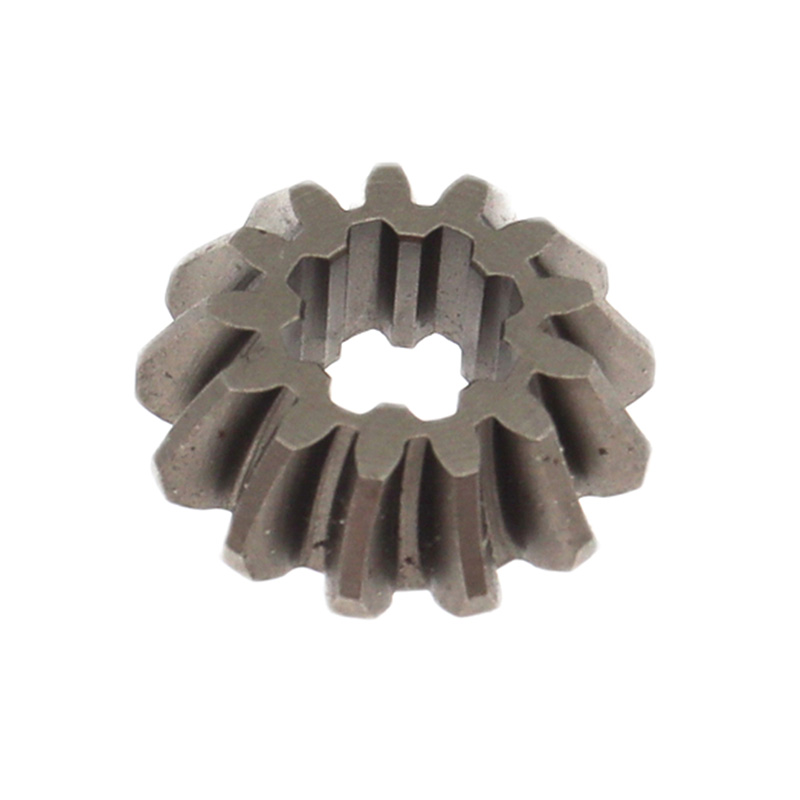
In marine and outboard applications, several gear types are dominant because of their ability to handle high torque in compact spaces:
- Spur gears
- Straight teeth, simple to manufacture.
- Common in auxiliary systems but less favored in high‑speed, high‑load marine final drives due to noise.
- Helical gears
- Angled teeth, smoother and quieter than spur gears.
- Suitable for marine auxiliary geartrains where noise reduction is a priority.
- Bevel gears (straight and spiral bevel)
- Used to transmit power between intersecting shafts, typically at 90°.
- Spiral bevel gears are widely used in outboard lower units because they deliver smoother meshing and better load distribution, reducing noise and wear. [accio]
- Worm gears
- High reduction ratios in a compact package.
- Used in steering mechanisms and some hoisting or winch systems, rather than primary propulsion gearboxes.
A solid gear design process always starts with choosing the right gear type for the load case, shaft arrangement, and packaging constraints in the outboard or gearbox. [accio]
Even though each manufacturer uses specific design criteria, the core geometric elements are universal:
- Module or diametral pitch – defines tooth size and is directly related to load capacity.
- Number of teeth and gear ratio – determines speed reduction or increase between input and output.
- Pressure angle – influences strength, sliding characteristics, and load distribution.
- Face width – affects load capacity and stiffness.
- Helix angle (for helical gears) – impacts smoothness, axial forces, and manufacturing complexity.
For outboard gears, the design must balance high torque at low speed (propeller) with compact geometry inside the gearcase, which often leads to highly optimized spiral bevel gear sets with carefully controlled backlash and tooth form. [accio]
Unlike many industrial drives that operate under relatively steady loads, marine applications face variable and shock loads from:
- Wave impact and hull slamming
- Rapid throttle changes and emergency reverse engagement
- Propeller cavitation and re‑immersion during rough seas
This leads to:
- High cyclic stress on gear teeth
- Repetitive torque peaks during acceleration and deceleration
- Elevated risk of pitting, scuffing, and tooth root fatigue
As a result, safety factors and tooth root strength margins are often set higher in marine gear design than in comparable land‑based systems. [accio]
In an outboard lower unit, gears must maintain precise alignment despite:
- Thermal expansion
- Case deflection
- Bearing wear over long operating hours
Good practice includes:
- Choosing bearing arrangements that control axial and radial play.
- Designing backlash values that balance:
- Sufficient clearance for lubrication and thermal growth.
- Minimal noise and impact during gear engagement.
- Using micro‑geometry modifications (crowning, lead correction) to prevent edge contact under misalignment.
Noise reduction is especially important in leisure outboards where end‑users are sensitive to gear whine and rattle, and it directly influences perceived product quality. [parashifttech]
For marine and outboard gears, material selection must address both mechanical strength and corrosion resistance:
- Alloy steels (e.g., 20CrMnTi, 18CrNiMo7‑6 and similar grades)
- Excellent hardenability and fatigue strength.
- Typically used with carburizing and quench hardening, followed by grinding.
- Require effective surface protection and sealed gearcases to mitigate corrosion.
- Stainless and corrosion‑resistant steels
- Better corrosion resistance but often more difficult and costly to machine and heat treat.
- Typically reserved for smaller gears or special conditions.
- Bronze / brass alloys
- Good for worm wheels and some low‑speed components.
- Not normally used for high‑torque outboard final drive gears.
In practice, hardened alloy steel gears running in sealed, oil‑filled, corrosion‑protected gearcases remain the dominant solution for outboard drives and marine gearboxes. [accio]
Marine gears must endure billions of cycles under mixed rolling and sliding contact.
Key heat‑treatment targets include:
- Carburizing depth – provides a hard case for wear resistance and a tough core for shock resistance.
- Surface hardness – typically in the high HRC range for tooth contact surfaces.
- Low distortion heat‑treatment – vital to maintain tooth geometry accuracy, especially for precision spiral bevel gears.
A tight feedback loop between heat‑treatment, gear grinding, and inspection is essential to ensure gears run quietly and last through long seasons of marine operation. [siggear]
Before drawing the first tooth profile, we work closely with OEM customers to define:
1. Input data
- Engine power and maximum torque
- Input speed and operating duty cycle
- Propeller speed, pitch, and target vessel speed
2. Environmental and regulatory constraints
- Saltwater vs. freshwater
- Operating temperatures
- Relevant marine standards and certifications
3. Packaging and integration
- Shaft layout and angles
- Gearcase dimensions
- Noise and vibration thresholds
Getting these elements right at the outset prevents costly re‑designs and ensures gears are fit‑for‑purpose for real boats on the water. [parashifttech]
Using established gear design standards, our engineering team:
- Selects gear type and ratio based on required reduction and shaft arrangement.
- Calculates:
- Tooth bending stress
- Contact stress
- Required module, face width, and pressure angle
- Defines safety factors considering marine‑specific overloads and shock loads.
Modern CAD and simulation tools allow us to model load distribution, deflection, and contact patterns, then refine the micro‑geometry for optimal performance before cutting the first gear blank. [accio]
For outboard gears and marine gearboxes, lab calculations are only the start.
To meet E‑E‑A‑T standards of real‑world experience, we emphasize:
- Bench testing
- Durability rigs that simulate real operating loads.
- Noise and vibration measurement to fine‑tune tooth modifications.
- Field trials with actual boat users
- Monitoring performance under different sea states.
- Collecting user feedback on noise, smoothness, and perceived power.
This feedback has led to design improvements such as:
- Refining tooth flank modifications to reduce gear whine in certain RPM bands.
- Adjusting surface finishes and lubricants for better corrosion resistance during seasonal lay‑ups.
Integrating user experience and marine operator feedback directly into our design loop is a core part of how Ningbo Gill Transmission builds trustworthy marine gears that satisfy both engineers and skippers. [pencilandpaper]
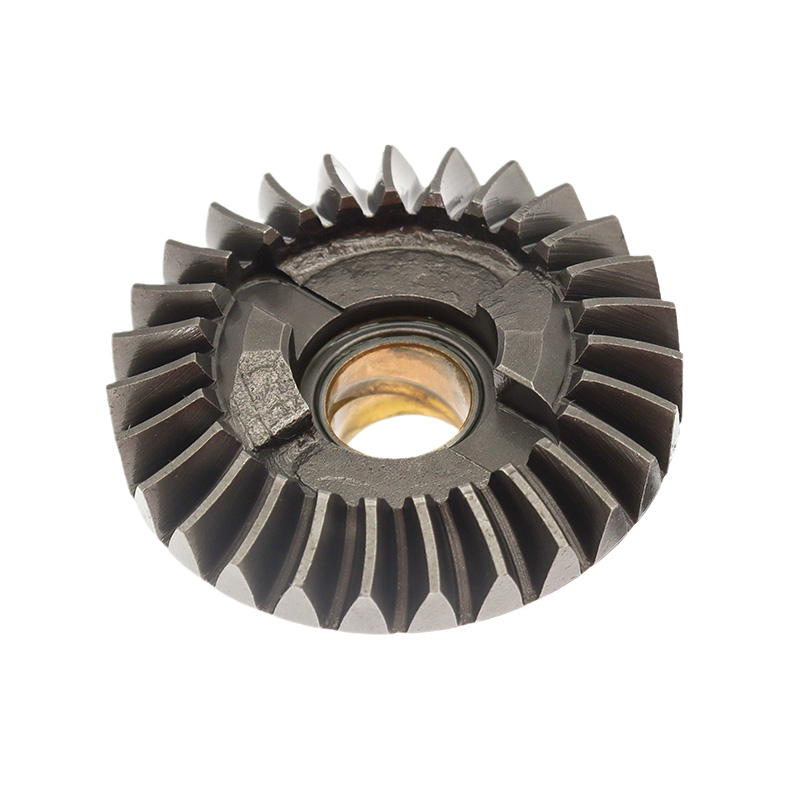
To illustrate how practical gear design decisions drive real value, consider a typical OEM challenge:
A customer reported:
- Premature pitting on spiral bevel gear teeth in a 150 HP outboard.
- Noticeable gear whine at mid‑range RPM.
- Increased warranty claims after heavy commercial use in coastal waters.
Our engineers at Ningbo Gill Transmission Parts Co., LTD. implemented a structured response:
1. Failure analysis
- Microscopic examination of tooth surfaces to distinguish between pitting and scuffing.
- Verification of material composition and hardness.
- Checking alignment and bearing preload from returned units.
2. Design modifications
- Slightly increased face width and adjusted tooth curvature to improve load distribution.
- Optimized carburizing depth to balance surface hardness with core toughness.
- Refined micro‑geometry based on loaded tooth contact analysis to eliminate localized stress peaks.
3. Testing and validation
- Durability testing under elevated torque conditions.
- On‑water trials with commercial users, focusing on noise, smoothness, and long‑hour operation.
After applying these gear design improvements:
- Gear pitting life increased significantly under the same torque level.
- Noise complaints were reduced thanks to smoother meshing behavior.
- The OEM reported lower warranty rates for the updated gear sets during the next season.
This case reflects how sound gear design principles plus direct marine operating experience can transform gear performance and total cost of ownership for boat builders and operators. [parashifttech]
Gear design content can be dense, so we recommend structuring technical data in a clear, scannable format for engineers and buyers. [docsie]
| Parameter | Typical Value (Example) |
|---|---|
| Gear type | Spiral bevel gear set |
| Application | 90–200 HP outboard lower unit |
| Gear ratio | 2.00:1 – 2.15:1 |
| Material | Carburizing alloy steel |
| Surface hardness | High HRC range (case hardened) |
| Face width | Optimized for torque and packaging |
| Heat treatment | Carburizing, quenching, tempering |
| Finish | Ground tooth flanks, honed contact area |
| Lubrication | Marine gear oil in sealed gearcase |
Tables like this allow users to quickly compare options and understand the technical baseline, while detailed text explains the rationale behind each parameter. [docsie]
As a specialist in outboard gears and marine transmission components, Ningbo Gill Transmission Parts Co., LTD. offers:
- Custom gear design and optimization
- Spiral bevel gears, helical gears, spur gears, and related transmission components tailored to marine requirements.
- Integrated manufacturing capabilities
- Precision machining, hobbing, grinding, and controlled heat‑treatment to achieve tight tolerances and stable performance.
- Quality and reliability focus
- Multi‑stage inspections, including material traceability, hardness tests, and gear meshing checks.
- Batch and sample testing to verify performance for both small runs and large OEM volumes. [parashifttech]
By combining engineering expertise, manufacturing experience, and feedback from real boat operators, we help builders and distributors deliver more reliable and competitive marine products to global markets. [parashifttech]
If you are:
- Developing a new outboard engine platform or marine gearbox, or
- Seeking a reliable partner to optimize gear life, reduce noise, and improve overall driveline efficiency,
then now is the ideal time to involve a specialist gear manufacturer. Early collaboration shortens development cycles, reduces risk, and delivers a better experience to your end‑users. [parashifttech]
Contact Ningbo Gill Transmission Parts Co., LTD. to discuss your next gear project, share your technical requirements, or request an engineering review of your existing gear sets.
Together, we can turn your performance targets into a robust, field‑proven gear solution for harsh marine environments.
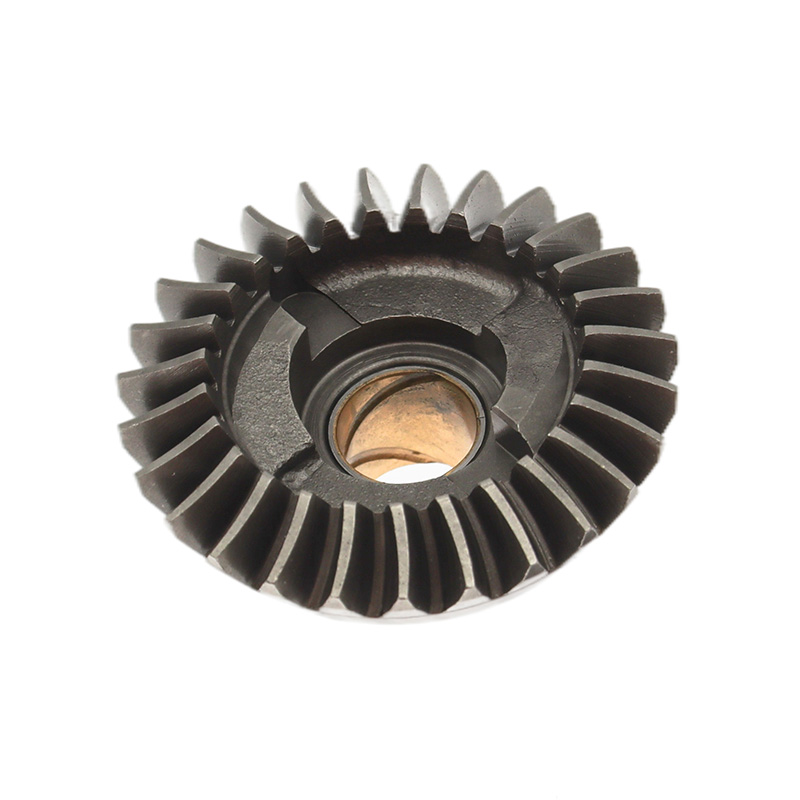
Because outboard engines must turn vertical crankshaft power into horizontal propeller shaft torque in a compact space, spiral bevel gears provide an efficient 90° power transfer with smoother meshing, better load distribution, and reduced noise compared with straight bevel gears. [accio]
Saltwater accelerates corrosion of metallic components.
Marine gear design therefore emphasizes:
- Sealed gearcases and high‑quality lubricants
- Corrosion‑resistant materials and coatings
- Robust sealing around shafts and fasteners
Even when gears themselves are made from high‑strength alloy steels, corrosion control around the entire transmission system is essential. [accio]
There is no single factor, but correct tooth geometry, proper heat‑treatment, precise alignment, and high‑quality lubrication together have the biggest impact.
Poor alignment or improper heat‑treatment can quickly lead to pitting and noise even if the basic material and tooth design are adequate. [accio]
Ideally, at the concept stage.
When the gear manufacturer is involved early, they can:
- Advise on feasible gear ratios and shaft layouts
- Suggest design changes that simplify manufacturing
- Help define testing programs to verify durability before launch
This reduces redesign cycles and speeds up time to market. [parashifttech]
In many cases, yes.
By adjusting micro‑geometry, contact patterns, and heat‑treatment parameters, a skilled gear designer can often reduce noise and improve smoothness while keeping the same housing, shaft centers, and mounting points—though each project requires detailed analysis and testing. [parashifttech]
1. Google E‑E‑A‑T: What Is It & How To Demonstrate It For SEO – Search Engine Journal
https://www.searchenginejournal.com/google-e-e-a-t-how-to-demonstrate-first-hand-experience/474446/ [searchenginejournal]
2. How to Write Content That Meets Google's E‑E‑A‑T Guidelines – Brand New Copy
https://brandnewcopy.com/content-google-e-e-a-t-guidelines/ [brandnewcopy]
3. Stand Out in Manufacturing SEO Using E‑E‑A‑T – Parashift Tech
https://www.parashifttech.com/blog/stand-out-in-manufacturing-seo-using-e-e-a-t-to-build-real-online-trust-and-growth [parashifttech]
4. UX Documentation: Definition, Examples & Best Practices – Docsie
https://www.docsie.io/blog/glossary/ux-documentation/ [docsie]
5. Technical SEO For Marine Websites – Digital Deckhand
https://digitaldeckhand.com/technical-seo-for-marine-websites/ [digitaldeckhand]
6. SEO For Ship Building Services – ThatWare
https://thatware.co/seo-for-ship-building-services/ [thatware]
7. 7 Simple SEO Tips For Marine Dealers – MRAA
https://mraa.com/7-simple-seo-tips-for-marine-dealers/ [mraa]
8. Professional Micro Gear Transmission System – Guangdong Siggear Drive
(PDF catalogue) https://www.siggear.com/uploads/catalogue-of-siggear-2024-11-22.pdf [siggear]
9. Professional Marine Gearbox Manufacturing Overview – Accio (industry analysis example)
https://www.accio.com/supplier/gearbox-manufacturing-for-fishing-boats [accio]


