


close
Choose Your Site
Global
Social Media
Views: 222 Author: Gill Transmission Publish Time: 2026-05-20 Origin: Site


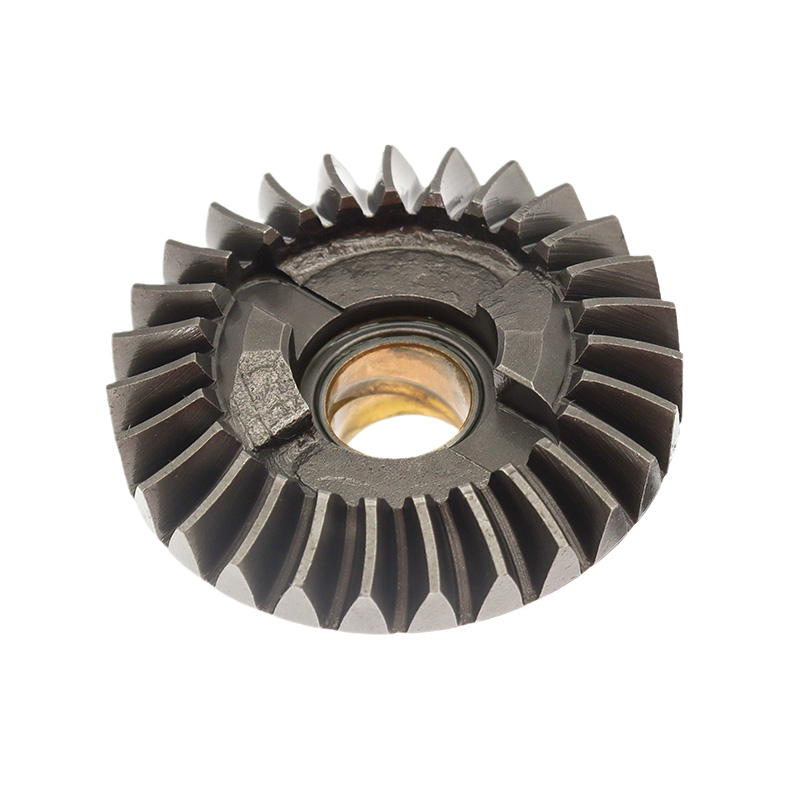
Designing outboard gears and other marine transmission components is not just a matter of selecting a standard module and pressing "start" on a CNC machine. In real projects, engineers must clarify operating conditions, safety margins, and manufacturability long before the first chip is cut. In this guide, I will walk you through a practical, step‑by‑step way to determine gear specifications, combining classical gear design theory with lessons learned from real outboard drive projects in our Ningbo facility. [gilltransmission]
By the end of this article, you will be able to:
- Clarify gear specifications for outboard and general industrial drives. [mraa]
- Translate application requirements into basic gear elements (module, tooth count, face width, material, accuracy). [mraa]
- Avoid common failure modes in marine gear sets, including pitting, scuffing, and tooth breakage. [cmlabs]
- Prepare a clear RFQ or design brief for OEM gear manufacturing partners such as Ningbo Gill Transmission Parts Co., LTD. [gilltransmission]
For clarity and SEO performance, this article focuses on the following core terms and scenarios:
- Outboard gears and marine transmission gears
- Gear design procedure and gear specification
- Bevel gears and helical gears used in outboard lower units
- Practical gear design for marine propulsion systems
These terms appear naturally in headings and body text to support both human readers and search engines, without keyword stuffing. [lsdigital]
In many failed gear projects I have reviewed, the drawings were beautifully detailed—but the actual operating conditions were never fully captured. For outboard gears and marine drives, this first step is critical. [lsdigital]
Before choosing module or tooth count, quantify:
- Rated power and speed of the engine or motor (kW/HP and rpm). [mraa]
- Maximum transient load, such as acceleration, sudden reverse, or propeller impact with debris. [cmlabs]
- Duty cycle: continuous cruising, intermittent use, trolling, or rental/fleet service with long daily operation. [mraa]
For example, a coastal fishing boat outboard might run at 70–80% rated power for hours, while a rental boat in a resort experiences frequent start–stop and low‑speed maneuvering. This difference directly affects the design safety factors you select. [cmlabs]
Outboard gears operate in a harsh, mixed environment:
- Saltwater exposure and humidity via seals and venting.
- Temperature variation from cold starts to high oil temperatures after long runs.
- Shock loads from waves, cavitation, and gear shifting.
These factors influence material selection, surface treatment, and lubrication requirements. [cmlabs]
Once the environment is clear, define what the gear pair must actually do. [mraa]
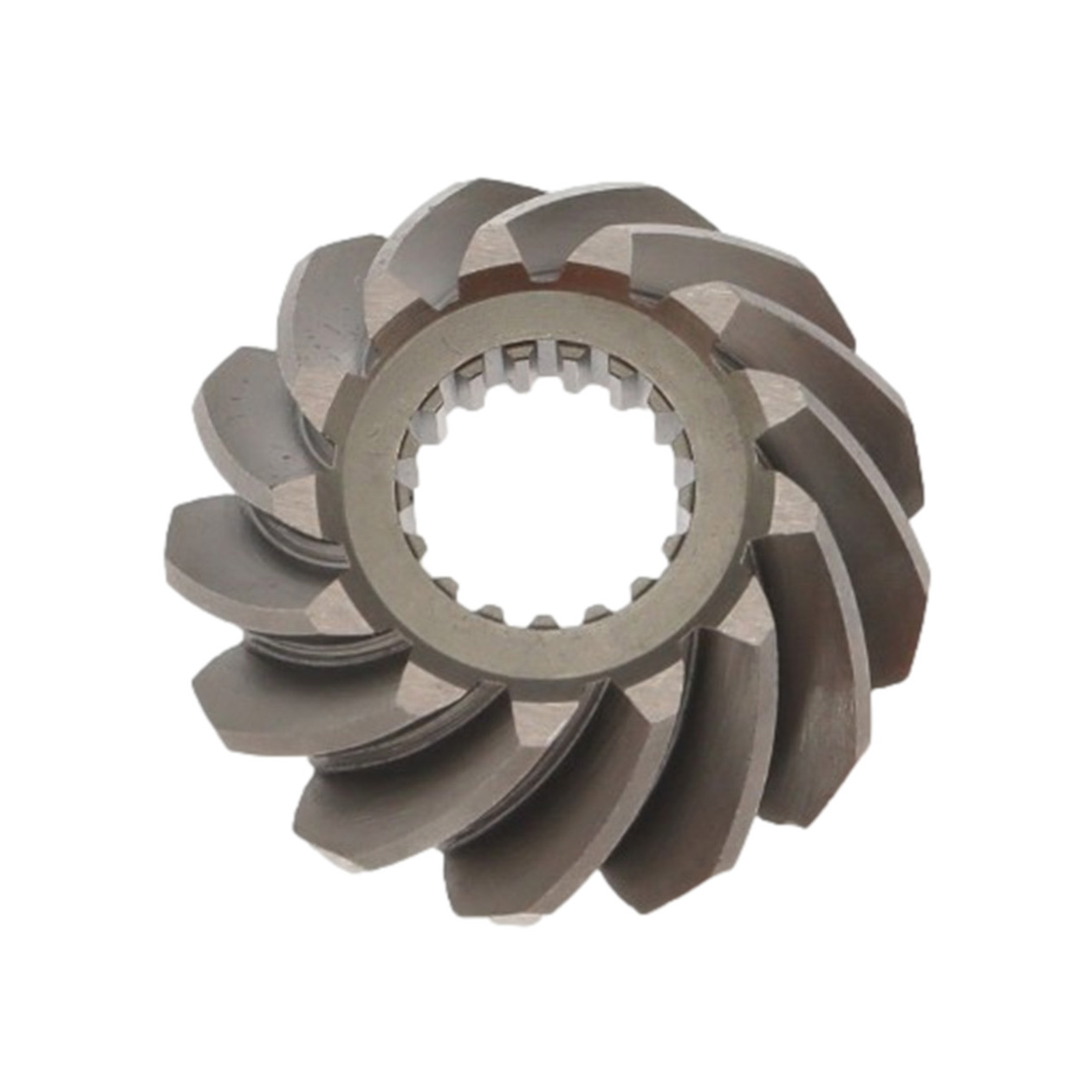
Outboard lower units commonly use bevel or hypoid gears to change direction from vertical to horizontal while reducing speed. Functional requirements include: [cmlabs]
- Target gear ratio (e.g., 2.0:1, 2.15:1, 2.33:1) based on engine torque curve and propeller choice.
- Rotation direction of propeller (standard vs counter‑rotation for twin engines).
- Acceptable tolerance on actual ratio, which impacts propeller selection and performance prediction.
In a compact outboard lower unit, space is limited:
- Center distance between input and propeller shafts.
- Maximum gear outside diameter constrained by housing and sealing.
- Face width limits imposed by bearing spacing and housing thickness.
These constraints often force trade‑offs between gear strength and housing size, which must be resolved early in design. [mraa]
After defining use case, environment, and functional requirements, you can start determining the basic gear elements. [mraa]
Typical choices in marine and outboard applications:
- Spiral bevel gears for smooth torque transmission at right angles with relatively compact size. [mraa]
- Helical gears in intermediate gearboxes (e.g., between engine and vertical shaft) where noise control is a priority. [mraa]
- Straight bevel gears for simpler, lower‑cost drives or lower speeds.
When noise and vibration are critical—as they are in high‑end recreational boats—spiral bevel or hypoid gears with ground tooth flanks are usually preferred. [mraa]
Module and tooth count determine gear size and strength. A typical workflow is:
1. Start with center distance and desired ratio, and select preliminary tooth counts (z1, z2). [mraa]
2. Choose a standard module that satisfies strength requirements while fitting within the allowed outer diameter. [mraa]
3. Check for undercutting, interference, and minimum tooth count, especially on the pinion. [mraa]
As a rule of thumb, increasing module improves bending strength but also increases size and weight, which is undesirable for compact outboard gearcases. [mraa]
For marine gears, material and heat treatment decisions are as important as geometry. [cmlabs]
Common options used in outboard gears and marine transmissions include:
- Alloy steels such as 20CrMnTi, 20MnCr5, or similar carburizing steels with good hardenability. [mraa]
- Nitriding steels for applications where distortion needs to be minimized. [mraa]
The choice depends on the required surface hardness, core toughness, and distortion tolerances after heat treatment. [mraa]
Marine gears are usually:
- Carburized and quenched to achieve high surface hardness (e.g., 58–62 HRC) for pitting resistance. [mraa]
- Then tempered to adjust toughness.
- Finally ground or honed to achieve precise flank geometry and surface finish. [mraa]
This combination improves load capacity and fatigue resistance while controlling noise, which is important in leisure marine applications. [cmlabs]
To ensure reliability, gear designers perform bending and contact stress calculations using standards such as ISO or AGMA. [mraa]
Key checks include:
- Tooth root bending strength to prevent tooth breakage under maximum torque and shock loads. [mraa]
- Hertzian contact stress to avoid pitting and surface fatigue. [mraa]
- Scuffing risk under high sliding and temperature, which can occur in heavily loaded outboard bevel gears. [mraa]
Safety factors must consider real‑world operating conditions, including overloads, misalignment, and lubrication quality. [lsdigital]
Based on field experience in outboard transmissions, practical guidelines include:
- Use higher safety factors for fleets, rental boats, and commercial vessels compared with private leisure boats. [cmlabs]
- Consider low‑speed, high‑torque conditions such as docking and trolling, which can be more demanding than cruising.
- Account for oil dilution or contamination due to water ingress, which reduces film thickness and increases contact stress.
These practical corrections are often missing in purely textbook calculations, but they strongly influence real gear life. [lsdigital]
For many OEM customers, the perceived quality of the outboard is closely linked to transmission noise and vibration. [cmlabs]
Selecting a suitable accuracy class involves balancing cost and performance:
- Higher accuracy (e.g., JIS 0–2, AGMA 10+) improves meshing smoothness and reduces noise and vibration. [mraa]
- Moderate accuracy may be sufficient for low‑speed workboats, but premium recreational outboards often require ground spiral bevel gears. [mraa]
Beyond nominal geometry, micro‑geometry corrections such as crowning, flank modification, and lead correction help:
- Compensate for deflection under load.
- Reduce edge contact and localized stress.
- Lower noise and extend service life.
These optimizations rely on both simulation and feedback from test runs and customer usage, reflecting the "Experience" part of E‑E‑A‑T. [lsdigital]
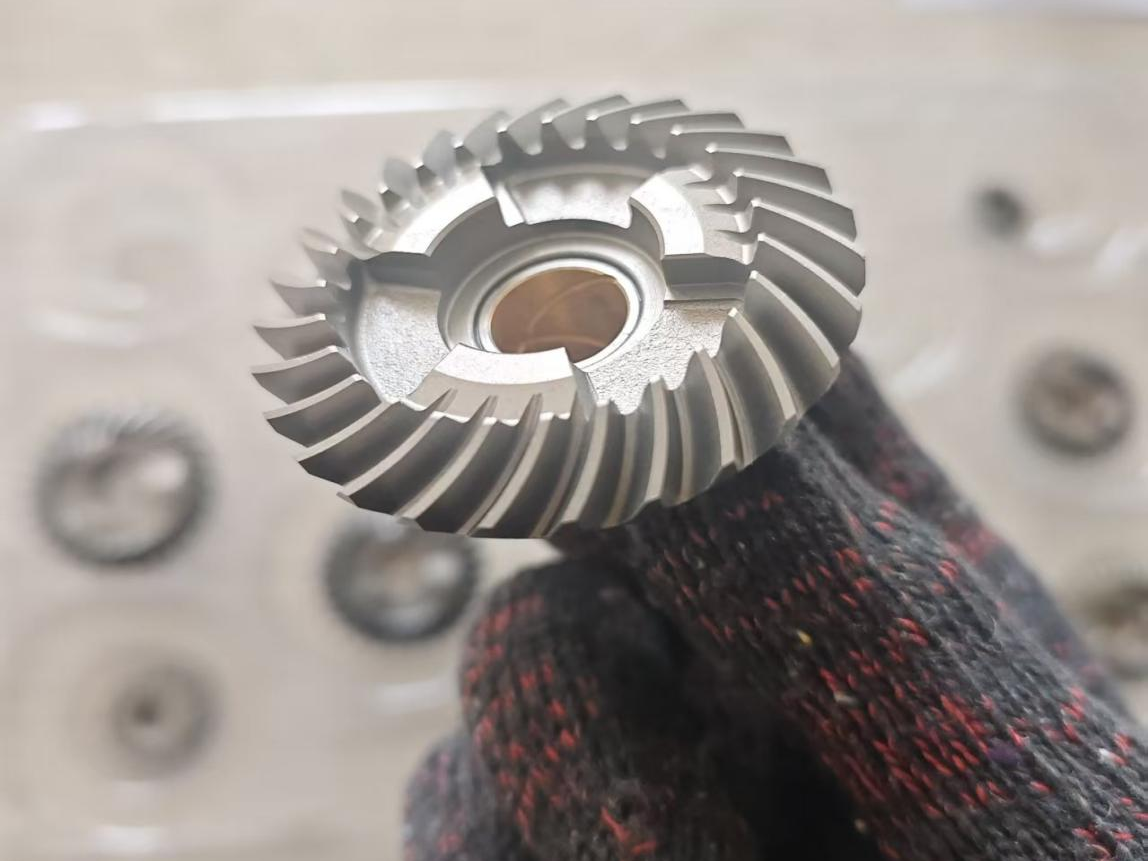
To illustrate these principles, consider a simplified real‑world scenario inspired by projects at Ningbo Gill Transmission Parts Co., LTD. [gilltransmission]
A mid‑power outboard OEM reported:
- Premature pitting on drive and driven bevel gears after 300–500 hours in rental fleets.
- Noticeable whine at mid‑range RPM, leading to user complaints.
Original design data showed adequate theoretical safety factors but did not fully reflect the actual duty cycle and environment. [mraa]
After reviewing operating conditions, we implemented:
- A small increase in module and face width within the existing housing constraints to raise pitting resistance. [mraa]
- A change from standard carburizing steel to a higher hardenability alloy, improving core toughness and surface hardness consistency. [mraa]
- Micro‑geometry correction on the pinion to compensate for housing and shaft deflection under load. [mraa]
- Updated lubricant specification with improved anti‑scuffing performance for high‑sliding areas. [cmlabs]
Field data from rental fleets showed:
- Gear life extended to over 1,200 hours before noticeable wear.
- Measured gear whine reduced in the critical mid‑range RPM band.
- Warranty claim rate on the gear set dropped significantly.
This case demonstrates how experience‑driven adjustments can turn a "theoretically OK" gear into a robust solution for harsh marine use. [gilltransmission]
When you prepare a gear design brief or RFQ for outboard gears, use this checklist to ensure nothing critical is missed. [gilltransmission]
- Target application (outboard, inboard, marine gearbox, winch, etc.)
- Rated power and speed, peak torque, duty cycle
- Environment (freshwater/saltwater, temperature range)
- Expected service life and maintenance interval
- Gear type (spiral bevel, straight bevel, helical, spur)
- Transmission ratio and rotation direction
- Center distance and allowable maximum diameter
- Required accuracy grade and noise level
- Preferred material or performance class (case‑hardened alloy steel, etc.)
- Required hardness range and depth (if known)
- Required surface finish or grinding standard
- Inspection standards and documentation (e.g., AGMA/ISO reports)
By providing this information up front, you help your manufacturing partner provide faster, more accurate quotations and design proposals, reducing iteration cycles and time‑to‑market. [boatmarketingpros]
Technical data tables can be intimidating, especially for non‑specialists in purchasing or management roles. Use this quick guide to interpret common columns in outboard gear catalogs. [expertsupport]
| Parameter | What it means in practice |
|---|---|
| Module (m) | Tooth size; larger m usually means stronger, larger gear |
| Teeth (z1/z2) | Determines ratio and minimum pinion strength |
| Gear type | Spiral bevel, straight bevel, helical, spur, etc. |
| Face width (b) | Tooth axial length; increases load capacity |
| Material / hardness | Indicates strength, wear resistance, and toughness |
| Accuracy grade | Links directly to noise and vibration |
| Rated torque / power | Safe operational range under defined conditions |
When comparing different suppliers, ensure you are comparing equivalent conditions, such as the same safety factors and duty cycles. [mdazizurrahman.com]
As a manufacturer focused on gears, drive shafts, propeller shafts, and clutch dogs since 1997, Ningbo Gill Transmission Parts Co., LTD. combines theoretical gear design with extensive marine and outboard application experience. [gilltransmission]
We help OEM customers:
- Refine initial gear specifications based on real‑world duty cycles.
- Optimize material, heat treatment, and micro‑geometry for marine environments.
- Balance cost, durability, and noise in outboard gear sets.
If you are planning a new outboard model, re‑engineering an existing gear set, or solving field reliability issues, engaging a specialist early in the design phase can save multiple prototype loops. [lsdigital]
If you are evaluating a new outboard gear or marine gearbox design and need support on specifications, strength checks, or manufacturability, you can:
- Share your current drawings, loads, and constraints for a design review.
- Request sample gears or trial production for validation in your own test rigs.
- Consult on failure analysis for existing gears in the field.
To discuss your project, contact Ningbo Gill Transmission Parts Co., LTD. through the details on our official website. A short technical call at the beginning of your project can help you avoid costly redesigns later. [gilltransmission]
Q1: What is the most important first step when designing outboard gears?
A1: The most important step is to clarify real operating conditions—power, torque, duty cycle, and environment—before fixing module or tooth count. [mraa]
Q2: Why are spiral bevel gears preferred in many outboard lower units?
A2: Spiral bevel gears offer smooth torque transmission and compact layout at right angles, with better noise performance than straight bevel gears at high speed. [mraa]
Q3: How does the marine environment affect gear material selection?
A3: Saltwater, temperature variation, and shock loads require corrosion‑resistant, tough core materials with hard, wear‑resistant surfaces, usually achieved through carburizing and grinding. [cmlabs]
Q4: Can I reuse industrial gear designs for marine outboard applications?
A4: Often not directly. You must adapt designs for different duty cycles, lubrication conditions, and space constraints specific to marine gearcases. [cmlabs]
Q5: When should I involve a gear manufacturer in my design process?
A5: Involve your manufacturer as early as possible, ideally before finalizing geometry and tolerances, so they can advise on feasible materials, heat treatment, and cost‑effective production methods. [gilltransmission]
1. KHK Gears – "Clarify Specifications and Determine Basic Elements" (Gear Design Procedure in Practical Design). [mraa]
2. LS Digital – "E‑E‑A‑T Guidelines 2025: How to Build Google‑Friendly Content." [](https://www.lsdigital.com/blog/e-e-a-t-guidelines-2025/)
3. Boat Marketing Pros – "SEO Explained for Marine Businesses." [](https://boatmarketingpros.com/seo-explained-by-a-marine-marketing-agency/)
4. MRAA – "7 Simple SEO Tips for Marine Dealers." [](https://mraa.com/7-simple-seo-tips-for-marine-dealers/)
5. Ningbo Gill Transmission Parts Co., LTD. – Official website and company news. [](https://www.gilltransmission.com) [](https://www.gilltransmission.com/Company-News-ic3194626.html)
6. cmlabs – "SEO for Marine Shipping Companies." [](https://cmlabs.co/en-id/sector-industry/transportation-companies/marine-shipping)


