


close
Choose Your Site
Global
Social Media
Views: 228 Author: Gill Transmission Parts Publish Time: 2026-10-26 Origin: Site


Content Menu
● China's Position in the Outboard Manufacturing Supply Chain
>> What the Latest Industry Data Means for Buyers
● How We Selected These Manufacturing Candidates
● Comparison Table: Capacity, MOQ, and Certification Visibility
● The Top 10 Manufacturing Candidates
>> 1. Ningbo Gill Transmission Parts Co., LTD.
>> 2. Suzhou Parsun Power Machine Co., Ltd.
>> 3. Hangzhou Hidea Power Machinery Co., Ltd.
>> 4. Suzhou Sail Motor Co., Ltd.
>> 5. Hangkai
>> 6. Yamabisi / Suzhou Allpass Machinery Co., Ltd.
>> 7. Hangzhou Seatan Machinery Co., Ltd.
>> 8. Lanxi Seawalker Boat Factory
>> 9. Zhejiang Anqidi Power Machinery Co., Ltd.
>> 10. Calon Gloria / Zhejiang Canglong Power Machinery Co., Ltd.
● Technical Buyer's Guide: What Makes a Reliable Lower Unit?
>> Specify Materials and Heat Treatment Together
>> Check Gear Geometry and Assembly Setup
>> Require Evidence of Sealing Performance
>> Interpret CE, RoHS, and ISO Claims Correctly
● The Overlooked Purchasing Trap: A Gear Set Can Fit and Still Be Wrong
● How to Qualify a Supplier Before a Production Order
>> 1. Verify the Factory and Certificate Holder
>> 2. Use a Staged Sample Process
>> 3. Measure Delivery Reliability
>> 4. Control Shipping and Receiving Risks
● Conclusion: Match the Manufacturing Model to Your Business
>> 1. How Can I Check Whether a Supplier's ISO Certificate Has Expired or Been Suspended?
>> 2. Can Two Lower Units with the Same Horsepower Rating Be Interchangeable?
>> 3. How Do I Detect Substituted Materials or Inadequate Heat Treatment?
>> 4. Should I Buy Complete Lower Units or Individual Gears and Shafts?
>> 5. How Can I Stop Production Quality from Drifting After Sample Approval?
China offers several sourcing routes for an Outboard Engine Lower Unit: specialist gear-and-shaft factories, complete outboard motor manufacturers, and marine equipment producers with replacement-parts programs. Choosing the right route matters more than choosing the most recognizable brand.
For purchasing managers, the central question is not simply whether a supplier can deliver a gearbox that fits. It is whether that supplier can repeatedly control gear geometry, heat treatment, shaft accuracy, sealing performance, and production changes.
This guide compares ten China-based manufacturing candidates, starting with Ningbo Gill Transmission Parts Co., LTD., a specialist in outboard transmission components. It distinguishes component manufacturing from complete-engine production and identifies information that still requires direct factory verification.
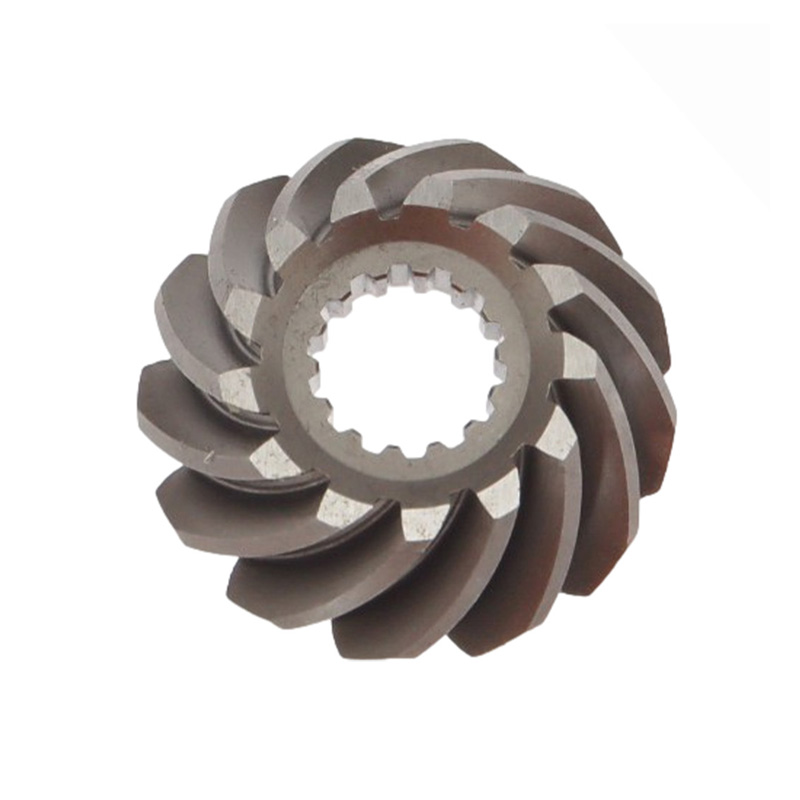
China's outboard manufacturing ecosystem is particularly visible in Zhejiang and Jiangsu. The companies reviewed here include manufacturers in Ningbo, Hangzhou, Taizhou, Haining, Lanxi, and Suzhou. Together, they illustrate a regional supply chain covering precision transmission parts, complete motors, marine equipment, and export-oriented assembly.
For international buyers, this concentration creates opportunities to compare machining specialists with complete-engine factories. However, geographic proximity does not prove that a manufacturer controls every critical process internally. Heat treatment, casting, coating, and even gear production should be mapped during the supplier audit.
The National Marine Manufacturers Association released its latest Outboard Engine Sales Trends findings in June 2026. U.S. outboard engine sales reached 267,000 units in 2025, down 3.9% year over year, while the shift toward higher-horsepower products continued. These figures describe the U.S. complete-engine market, not China's lower-unit production or exports.
That distinction matters. Complete-engine demand is useful background, but it cannot establish a supplier's replacement-gearbox capacity. Procurement teams should request model-specific output, warranty history, and production availability rather than extrapolating from broad market forecasts.
This shortlist uses publicly available manufacturer profiles, product information, trade-show listings, and industry sources. It is not based on factory visits or independent endurance testing.
Five evaluation dimensions should guide the subsequent purchasing decision:
| Evaluation area | Evidence to request | Why it matters |
|---|---|---|
| Manufacturing identity | Business license, factory address, process ownership | Distinguishes a production site from a sales office |
| Engineering capability | Controlled drawings, sample-development records, inspection methods | Indicates whether customization extends beyond packaging |
| Quality control | Material traceability, heat-treatment records, dimensional reports, assembly tests | Helps identify batch-consistency risks |
| Delivery reliability | Model-specific capacity, loading plans, subcontractor controls | Makes delivery promises measurable |
| Compliance and support | Current certificates, applicable declarations, warranty procedures | Reduces documentation and after-sales uncertainty |
The most important sourcing distinction is traceability: can the manufacturer connect a delivered part to its drawing revision, material batch, processing records, and final inspection?
A factory with substantial complete-engine output is not automatically a high-capacity supplier of separately packaged replacement lower units. Likewise, a transmission specialist may be a strong gear-set partner without offering complete assembled gearcases.
The following figures are supplier statements or published profile information, not independently audited production results. "Not established" means the reviewed sources did not establish a reliable figure or current status.
| Manufacturer | Relevant sourcing focus | Published capacity evidence | MOQ visibility | Certification visibility |
|---|---|---|---|---|
| Ningbo Gill Transmission Parts | Outboard gears and shafts | Over 3.6 million transmission components annually; not complete lower units | Request by drawing and part number | Reports ISO 9001 certification |
| Parsun | Complete outboards and associated platform parts | Reviewed profile identifies a facility exceeding 100,000 m²; no comparable lower-unit output figure | Request separately for engines and replacement parts | Request current model-specific documentation |
| Hidea | Complete outboards and associated service parts | Approximately 100,000 complete engines annually | Not established | Reports ISO 9001, CCS, EPA, and CE credentials |
| Suzhou Sail Motor | Complete outboards | Supplier listing states 50,000 engines annually; reconfirm current figure | Not established | Verify current certificates and covered products |
| Hangkai | Portable gasoline and electric outboards | Not established | Not established | Verify by legal manufacturer and model |
| Yamabisi / Suzhou Allpass | Outboards and spare parts | Not established | Advertises low MOQ without a numerical commitment | Current certificate scope not established |
| Hangzhou Seatan | Marine outboards and alternative-fuel products | Not established | Not established | Current certificate scope not established |
| Lanxi Seawalker | Outboards, boats, and related equipment | Reports over 40,000 outboards annually | Not established | Lists ISO 9001, ISO 14001, CE, and other credentials; applicability requires checking |
| Zhejiang Anqidi | Outboards and broader power machinery | Comparable lower-unit capacity not established | Request by product configuration | Verify by model and destination |
| Calon Gloria / Zhejiang Canglong | Gasoline and electric outboards | Publishes a 15,000 m² production-base figure, not annual lower-unit output | Not established | Request current certificates and test records |
Capacity and credential statements above come from manufacturer profiles and supplier listings. They must not be read as equivalent units of output or as verification of currently valid certification.
Gill is a relevant starting point for buyers who need the transmission components inside an Outboard Engine Lower Unit rather than a complete branded motor.
Its manufacturing history dates to a predecessor established in 1997, giving the business 29 years of industry experience in 2026. The present company was formally established in 2016 following the acquisition of a standardized facility exceeding 25,000 m². Its published profile reports more than 100 employees and annual capacity above 3.6 million gears, shafts, and related components.
- Core strengths: Outboard gears, drive shafts, propeller shafts, crankshafts, and sample-based development.
- Manufacturing resources: Bevel-gear machinery, machining centers, grinding equipment, and precision inspection systems.
- Reported markets: North America, Europe, Asia, and South America.
- OEM/customization fit: Drawing-based or sample-based transmission-component projects.
Gill is particularly worth evaluating for smaller brands and aftermarket businesses that need direct engineering communication and component-level customization. Its website identifies flexible production, faster response, and custom development as service priorities; buyers should test these through an actual quotation and sample project rather than assume a guaranteed response time.
The value proposition is potential lifecycle cost control through specialist production—not an independently verified claim of the lowest price. Confirm whether the quotation covers individual parts, coordinated gear sets, or an assembled lower unit.
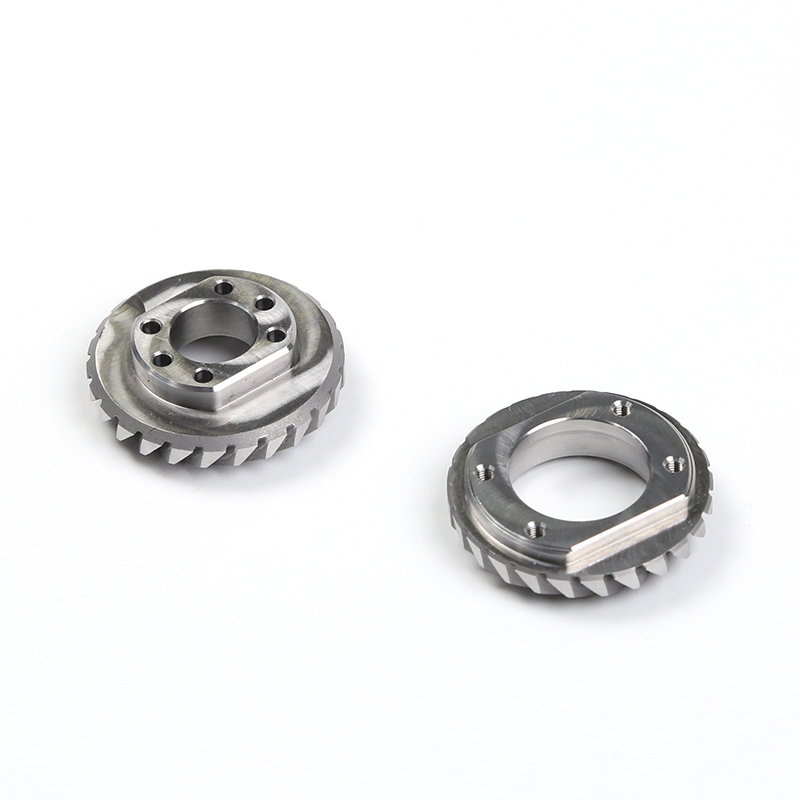
Parsun represents the complete-engine manufacturing route. Its current official history records formal establishment in 2004, although some older industry sources cite 2001. For contract due diligence, use the legal entity's registration documents rather than merging those dates.
The company's published range includes four-stroke, two-stroke, diesel, and electric propulsion products. Its current four-stroke lineup extends from 2.6 to 300 hp, making platform identification especially important when sourcing replacement assemblies.
- Core strength: Broad complete-engine platform coverage.
- Main market orientation: International outboard distribution; its historical OXE agreement also addressed the Chinese market.
- OEM/ODM scope: Confirm directly. A branded-engine portfolio does not establish willingness to supply private-label lower units.
Parsun is a useful candidate for buyers sourcing service parts around its engine platforms. Request part-number supersession records, gear ratios, rotation options, and written authorization for any proposed branding arrangement.
Hidea was established in 2008 according to published company-history information. Its official profile describes integrated research, manufacturing, and service operations, with annual engine capacity of approximately 100,000 sets and distribution across more than 80 countries or regions.
- Core strength: Complete-engine manufacturing supported by automated production and data collection.
- Main markets: Global distribution, including Europe and the Americas.
- Reported credentials: ISO 9001, China Classification Society certification, and EPA and CE credentials.
- OEM/ODM scope: Negotiate specifically; public manufacturing information does not establish unrestricted private-label availability.
For lower-unit procurement, ask whether assemblies are available separately from complete engines and whether the supplied configuration matches the exact model generation. Any certification claim should be checked against the certificate holder, model scope, and current status.
Sail's supplier materials distinguish its broader machinery history from its outboard activity: outboard manufacturing is stated to have begun in 2003. An older published supplier document reports annual production of 50,000 outboards and exports to more than 70 countries. These figures should be reconfirmed rather than treated as audited 2026 capacity.
- Core strength: Established two-stroke and four-stroke outboard product programs.
- Main markets: International export customers; current regional sales shares are not established.
- OEM/ODM scope: Verify the availability of private-label engines, replacement assemblies, and engineering changes separately.
Sail is a practical candidate for buyers comparing established small- and medium-power engine platforms. Confirm the contracting entity carefully: similarly named distributors and trading businesses should not be confused with the Suzhou manufacturing company.
Hangkai's reviewed brand profile describes entry into outboard development around 2000 and a portfolio spanning two-stroke, four-stroke, electric, air-cooled, and water-cooled products. A separate company site connects the brand with Taizhou Gongda, whose broader manufacturing history dates to the 1990s. The reviewed evidence does not establish one unambiguous legal founding year.
- Core strength: Portable outboard product coverage.
- Main markets: Obtain a current distributor and shipment-market list; regional sales concentration was not established.
- OEM/ODM scope: Require written confirmation of private-label rights and parts support.
Hangkai warrants additional identity checks before a long-term supply agreement. Record the legal manufacturer, brand owner, exporter, and warranty provider separately. For replacement lower units, obtain exploded drawings and model-year compatibility rather than relying on horsepower alone.
The Yamabisi website identifies Suzhou Allpass Machinery Co., Ltd. as the business producing outboards and spare parts. It states that major spare parts are produced and assembled through its own production operations and advertises OEM/ODM services with a low MOQ. No numerical minimum or clear founding year is established on the reviewed page.
- Core strength: Combined engine and spare-parts offering.
- Main markets: Not specified reliably in the reviewed profile.
- OEM/ODM scope: Publicly offered, but the precise engineering scope and minimum order require quotation.
This candidate may suit buyers exploring smaller private-label programs. However, parts of the company history reference development plans from 2009–2012. Request current product lists, equipment records, and shipment references before using older website statements to assess present capability.
Seatan describes itself as an integrated outboard and marine-products manufacturer covering research, manufacturing, sales, and marketing. Its profile emphasizes global leisure, fishing, and commercial marine applications, including LPG and electric product development. A founding year and comparable annual capacity were not established in the reviewed material.
- Core strength: Multiple propulsion concepts and application segments.
- Main markets: Global pleasure, fishing, and commercial marine customers.
- OEM/ODM scope: Confirm by project; the reviewed profile does not define a standard private-label program.
Seatan is worth investigating when a procurement project involves more than conventional gasoline propulsion. Do not assume that a lower-unit design can be transferred unchanged between gasoline, LPG, and electric platforms. Require operating-load and interface confirmation for the intended application.
Seawalker's official profile states that the business was founded in 2009. It describes operations involving Lanxi Seawalker Boat Factory and Jinhua Hiwave Boat Equipment Manufacture Co., Ltd., with more than 130 employees and annual production exceeding 40,000 outboards.
- Core strength: Combined outboard and boat supply.
- Main markets: Europe, Asia, Africa, Central America, and South America.
- Reported credentials: ISO 9001, ISO 14001, CE, and several other product-related credentials.
- OEM/ODM scope: Obtain a separate specification for engine customization and lower-unit supply.
This manufacturing model can be relevant for distributors purchasing boat-and-motor packages. Its broad credential list needs careful interpretation: battery transport documents, electrical approvals, and management-system certificates do not all apply to mechanical gearbox assemblies.
Anqidi was founded in 2006 and is based in Taizhou, Zhejiang. Its METSTRADE exhibitor profile identifies it as a manufacturer of custom outboard engines. Its official product range includes gasoline and electric outboards alongside broader power-machinery products.
- Core strength: Outboard production within a broader machinery manufacturing business.
- Main markets: International customers; current regional shares are not established.
- OEM/ODM scope: Custom outboard manufacturing is identified in its trade-show profile; detailed ODM services require verification.
Buyers should separate the company's total manufacturing resources from its actual lower-unit capability. Ask which gears, castings, shafts, and seals are made internally and which are purchased. Also confirm whether replacement assemblies remain available after an engine model is discontinued.
Calon Gloria's official profile records establishment in Huzhou in 2016 and relocation and reorganization in Haining in 2020. It describes investment in a 15,000 m² production base and a portfolio of two-stroke, four-stroke, and electric outboards.
- Core strength: Outboard development and assembly-process equipment.
- Main markets: Russia, South America, Asia, Africa, and Europe.
- Technical evidence: The company lists bearing-installation equipment, an underwater gear-nut tightening device, and a dynamic-performance simulation bench.
- OEM/ODM scope: The company seeks OEM partners, but component-level design responsibilities require agreement.
Calon Gloria is relevant for buyers evaluating a newer manufacturing platform. Request current inspection records and operating demonstrations of the listed equipment. A machine list supports audit planning; it does not replace evidence of repeatable production results.
A material designation alone is not a complete engineering specification. For gears and shafts, the purchasing drawing should define the required material, treatment condition, hardness, dimensional tolerances, and acceptance method.
Avoid approving substitutions merely because two grades have similar names. Require an engineering comparison covering chemistry, hardenability, mechanical properties, and the finished part's operating requirements.
For gearcases, specify the casting alloy and condition, critical machined features, coating system, and corrosion-protection requirements. The exact specification must follow the validated design—not a generic "marine-grade" description.
A compatible-looking gear is not necessarily a compatible transmission component. Relevant controls include tooth geometry, mounting dimensions, bearing locations, shaft runout, backlash, and tooth-contact pattern.
Manufacturer service information treats lower-unit assembly as a controlled procedure with model-specific inspections and adjustments. Use the appropriate service specification rather than applying one universal tolerance to every engine family.
For complete assemblies, agree on leak-test methods and acceptance criteria before sample approval. Where the applicable service procedure calls for pressure and vacuum testing, use its specified limits and sequence.
Also establish:
- Whether shafts must be rotated during testing.
- How shift positions are checked.
- Which seals and bearing suppliers are approved.
- Whether test results are recorded by serial or batch number.
- Whether shipment is dry or filled with specified lubricant.
ISO 9001 concerns the quality-management system; it is not a model-specific gearbox performance guarantee.
The EU Recreational Craft Directive 2013/53/EU covers defined watercraft, propulsion engines, and listed components. A complete engine's conformity documentation should not automatically be treated as proof that every separately supplied mechanical replacement part requires—or holds—its own CE marking under that directive.
Similarly, do not treat a RoHS statement as a universal marine durability certificate. Ask which product, substance requirements, test report, and destination-market rules the statement addresses.
A particularly important risk is approving gears individually while ignoring the complete assembly's setup.
A pinion, forward gear, and reverse gear may each pass basic dimensional inspection yet perform poorly when combined with a particular housing, bearing stack, and shim arrangement. Service documentation's model-specific assembly checks help explain why "same tooth count" is insufficient evidence of interchangeability.
A practical prevention plan is to:
1. Approve the relevant gear combination and assembly configuration.
2. Freeze the drawing revisions and approved manufacturing route.
3. Record the agreed contact-pattern and backlash acceptance criteria.
4. Require notification before changes to tooling, bearings, heat treatment, or machining.
5. Revalidate any change that affects the assembly's operating geometry.
This is not a claim that every outboard uses factory-matched gears. The requirement depends on the design. The purchasing lesson is to validate parts in their intended assembly, not only as loose components.
Match the business license, purchase-contract entity, bank beneficiary, manufacturing address, and certificate holder.
Use IAF CertSearch to check accredited management-system certification, then verify unresolved details directly with the issuing certification body. The database can show whether a listed certificate is active, suspended, or withdrawn.
A practical qualification sequence is:
1. Drawing and compatibility review.
2. First-article dimensional inspection.
3. Material and heat-treatment verification.
4. Assembly and functional evaluation.
5. Application-appropriate endurance testing.
6. Pilot-order inspection.
7. Controlled production release.
Define responsibility for test fixtures, destructive testing, freight, and failed-sample replacement before development begins.
Ask for capacity by part family and process, not just total factory output.
Request separate timing for tooling, sample production, heat treatment, finishing, inspection, and shipment preparation. During the pilot phase, measure actual on-time delivery against the agreed schedule.
Protect exposed shafts, splines, machined sealing surfaces, and mounting interfaces. Require packaging that prevents movement inside the carton or crate.
Confirm lubricant condition, transport requirements, Incoterms, cargo insurance, and incoming-inspection procedures. Do not assume that an advertised engine capacity translates into ready stock of replacement lower units.
The right Chinese supplier depends on what you are buying. A complete-engine manufacturer may suit platform-specific service-parts programs, while a transmission specialist may offer a more direct route for custom gears, shafts, and coordinated component development.
For smaller brands and aftermarket distributors, Ningbo Gill Transmission Parts Co., LTD. deserves evaluation as a specialist component partner. Its published manufacturing history, equipment base, and sample-development capabilities provide a starting point for technical discussions—not a substitute for project qualification.
Send Gill your drawings or reference samples, target engine models, annual demand, inspection requirements, and destination market. Request a component-by-component manufacturing proposal, sample plan, and quotation so the commercial discussion begins with an agreed technical scope.
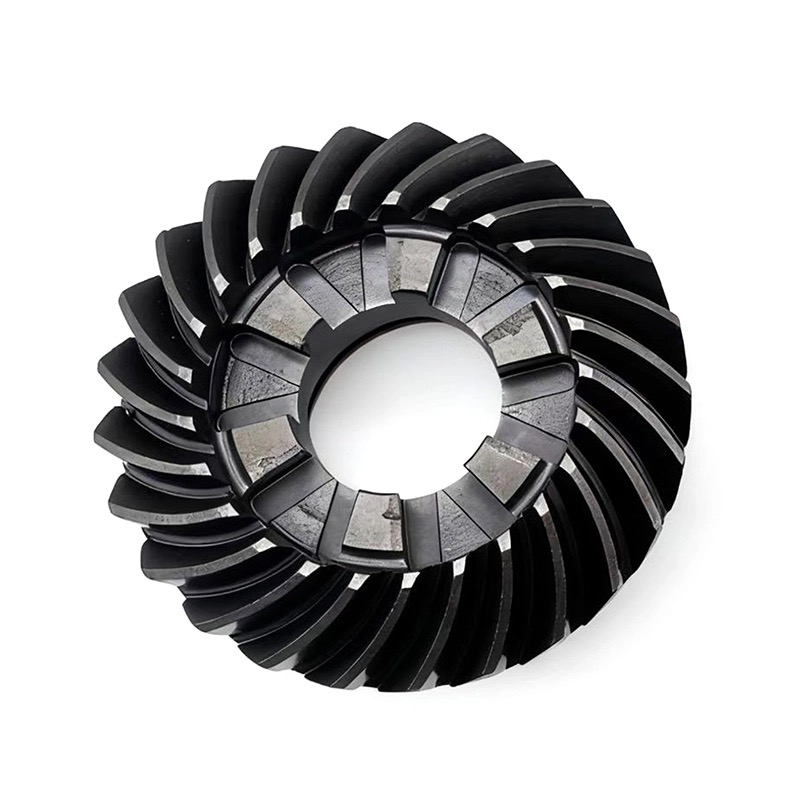
Search using the exact legal company name and certificate number in IAF CertSearch. Check the status, site address, standard, certification scope, and issuing body. Resolve missing or inconsistent records directly with the certification body; an expiry date printed on a PDF does not establish current active status.
Do not approve interchangeability from horsepower alone. Require confirmation of model generation, shaft length, spline interfaces, gear ratio, rotation, shift mechanism, cooling-water connection, and mounting dimensions.
Use a controlled compatibility drawing and installation trial. Model-specific service procedures remain important even when assemblies look similar.
Agree on a verification plan before ordering. It may include batch-linked material certificates, independent chemistry testing, hardness testing, and destructive metallurgical checks on agreed samples.
Specify the sampling frequency and acceptance limits contractually. A generic material report with no link to the delivered batch provides weak protection.
Choose complete assemblies when reducing local assembly work is the priority and the supplier can document configuration control and final testing.
Choose components when your business has qualified assembly capability, repair demand, or a need to control the transmission specification directly. Compare total cost, including tooling, inspection, assembly labor, warranty exposure, and inventory—not only purchase price.
Create a production-approval package containing the drawing revision, approved materials, process requirements, inspection plan, packaging, and accepted sample configuration.
Add written change-notification requirements and retain the right to inspect pilot and production batches. A signed sample alone does not define all the variables that must remain controlled.
- NMMA, "Latest Outboard Engine Trends Report Shows Shift to Higher Horsepower Continues," June 4, 2026: industry-association reporting on 2025 U.S. outboard engine sales. These figures are not China export statistics. [nmma]
- European Union, Directive 2013/53/EU: official legal framework for recreational craft, propulsion engines, and defined components. [eur-lex.europa]
- IAF CertSearch: accredited management-system certification validation and active-status information. [iafcertsearch]
- Ningbo Gill Transmission Parts: company history, facilities, equipment, markets, component capacity, and reported certification. [gilltransmission]
- Parsun: official company history and engine portfolio. [parsunpower]
- Hidea: official manufacturing capacity, distribution coverage, and reported credentials. [hideachina]
- Suzhou Sail Motor: supplier materials describing outboard manufacturing history and historical production figures. [scribd]
- Hangkai: brand-development history and associated manufacturing-company background. [hangkaimotor]
- Yamabisi / Suzhou Allpass: company identification, parts production, and advertised OEM/ODM services. [yamabisioutboard]
- Seatan: official manufacturer profile and application focus. [goseatan]
- Seawalker: official company history, capacity, markets, and credential claims. [seawalkerboat]
- Anqidi: METSTRADE exhibitor profile and official product information. [metstrade]
- Calon Gloria: official history, production-base information, equipment, markets, and OEM-partner outreach. [calonmarine]
- Crowley Marine, reproduced manufacturer service information: model-specific lower-unit inspection and assembly procedures. [crowleymarine]


