


close
Choose Your Site
Global
Social Media
Views: 264 Author: Gill Transmission Parts Publish Time: 2026-11-14 Origin: Site


Content Menu
● Alloy Steel Gears vs Stainless Steel Gears: Quick Comparison
● Why Carburized Alloy Steel Gears Suit Heavy Tooth Loads
>> A hard tooth surface and a tougher core do different jobs
>> SAE 8620 vs SAE 9310: Specify the finished gear, not just the grade
● Stainless Steel Gears: How 316, 420, and 17-4 PH Compare
>> 316 and 316L: Start here when corrosion matters more than tooth hardness
>> 420: A hardenable stainless option with corrosion limits
>> 17-4 PH: Specify the aging condition alongside the grade
● Which Material Works Best for Marine Outboard Gears?
>> Sealed lower units: Design for oil-lubricated contact
>> Exposed drives: Design for the worst wet location, not the easiest surface to inspect
● Three Practical Checks Before Approving a Gear Material
>> 1. Separate corrosion pits from contact fatigue
>> 2. Quote the finished gear set, not the price of the steel
>> 3. Validate the candidate against the failure you cannot accept
● Request an Outboard Gear Material Review
>> Are alloy steel gears stronger than stainless steel gears?
>> Is 316 stainless steel suitable for outboard gears?
>> Can 17-4 PH replace carburized SAE 8620?
>> Do stainless steel gears still need lubrication?
>> Does saltwater use mean I should order stainless steel outboard gears?
>> What should I include in an outboard gear RFQ?
Alloy steel gears vs stainless steel gears is not simply a choice between strength and corrosion resistance. For a heavily loaded outboard gear set running in a sealed, oil-filled lower unit, carburized alloy steel is a strong starting point. For a gear exposed directly to salt spray or washdown, stainless steel may make more sense, provided the grade and heat-treatment condition meet the tooth-load requirements. The right choice depends on what reaches the gear teeth, how the teeth are loaded, and which failure would take the equipment out of service first.
Our perspective at Ningbo Gill Transmission Parts Co., LTD. comes from 29 years of work in the development, manufacturing, and sale of outboard gears and other marine components. On a drawing review, one of the first distinctions we would make is whether "marine" describes the environment outside the housing or the environment at the gear mesh. Those are not the same design problem.
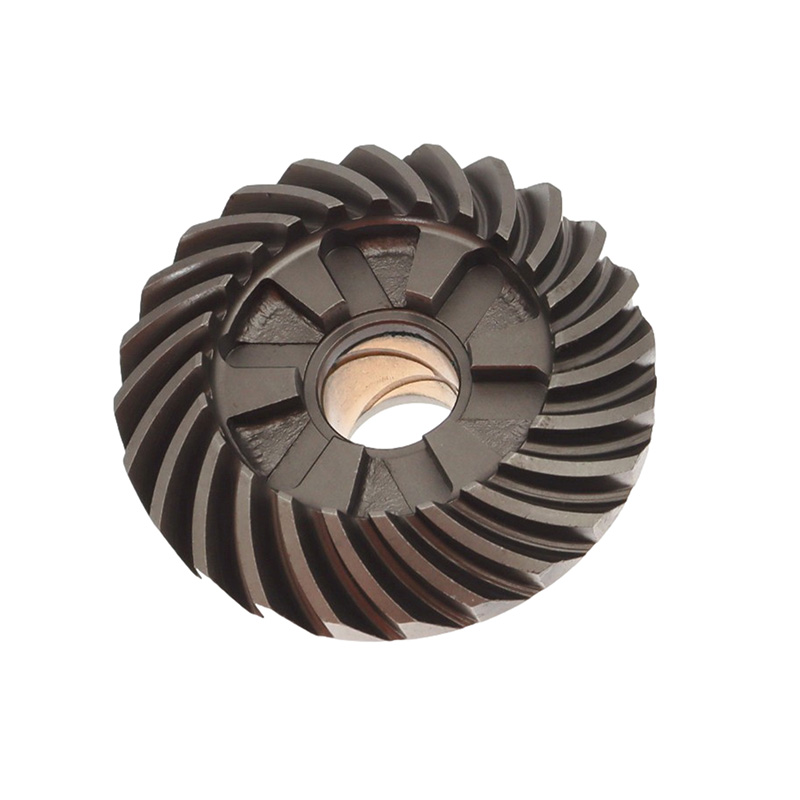
In this article, "alloy steel" refers to non-stainless engineering grades such as SAE 8620 and SAE 9310. Stainless steels are technically alloy steels too, but separating the two groups is useful when discussing gear specifications.
| Selection factor | Non-stainless alloy steel gears | Stainless steel gears |
|---|---|---|
| Typical candidates | SAE 8620 and SAE 9310 for carburized gears | 316/316L, 420, and 17-4 PH, depending on the load and environment |
| Tooth hardness | Carburizing creates a hard surface over a tougher core | Depends on the grade: 316 is not hardened by conventional quench-and-temper treatment; 420 can be; 17-4 PH is age-hardened |
| Heavy cyclic loads | A strong candidate for compact, highly loaded gear sets | Requires grade- and condition-specific checks for tooth-root and contact fatigue |
| Chloride exposure | Relies on barriers such as the housing, seals, and lubricant | Offers corrosion resistance, but pitting and crevice corrosion remain possible |
| Cost drivers | Heat treatment, distortion control, finishing, and inspection | Grade, stock form, machining, heat-treatment condition, and corrosion qualification |
| Good starting application | A sealed, lubricated outboard lower unit | An exposed or washdown gear drive with verified load capacity |
Carburizing enriches the surface of a steel part with carbon. After hardening and tempering, the outer layer, or case, can resist wear and repeated contact stress while the core retains more toughness. That combination is useful because a gear tooth has two distinct jobs: its flank transmits force through repeated rolling and sliding contact, while its root must withstand repeated bending.
A surface hardness reading does not tell you how far the hardened layer extends. Ask for effective case depth: the distance from the surface to a specified hardness threshold. The drawing should identify the test method and location and say whether the requirement applies after final finishing. A gear can meet its surface hardness target yet have too little hardened material left where the tooth was ground.
SAE 8620 is a practical candidate for carburized gears when it can deliver the required case and core properties in the actual tooth and blank geometry. SAE 9310 is worth evaluating when more demanding core properties or hardenability are required. Hardenability describes how readily steel develops hardness below the surface during quenching; it is not the same as the hardness measured on the finished tooth.
Harder is not always better. In one published constant-torque, constant-speed test on SAE 8620 hypoid gear sets, the reported median fatigue life at 0.42% surface carbon was about twice the result at 0.95%. But the lower-carbon group failed by pitting and spalling rather than tooth-root bending. That is not a carbon target for outboard gears. It shows why improving resistance to one failure mode does not necessarily improve the whole gear set.
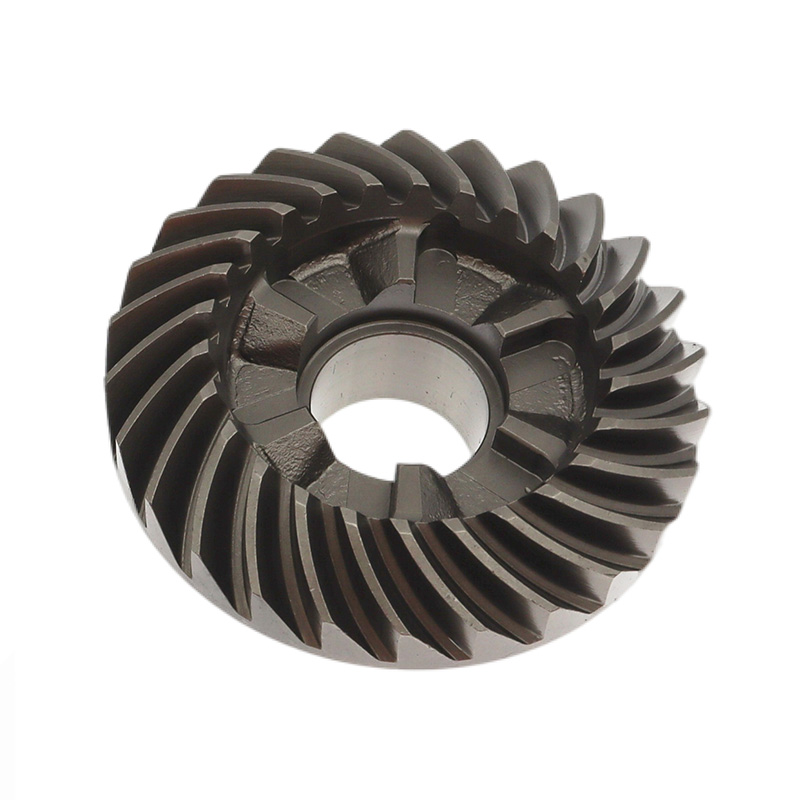
316 and 316L are molybdenum-bearing austenitic stainless grades. They are candidates for lightly loaded gears where chloride exposure and corrosion resistance matter more than achieving a hard tooth surface. Neither grade can be hardened throughout by conventional quenching and tempering. The "L" designates lower carbon; it does not mean the gear will carry more torque or resist every form of seawater attack.
420 is a martensitic stainless steel that can be hardened and tempered. One producer reports approximately 52 HRC, or Rockwell C hardness, for its 420 grade under a specified condition. That number illustrates what the grade can achieve; it is not a guaranteed finished-gear value or a substitute for fatigue data. For chloride service, qualify the actual finish and exposure rather than assuming 420 behaves like 316.
17-4 PH gains strength through precipitation hardening, an aging treatment that forms fine particles within the metal. H900 and H1150 are not interchangeable conditions. One supplier reports typical hardness of about 44 HRC for H900 and 33 HRC for H1150. H900 offers higher hardness and strength; H1150 trades some of that strength for greater ductility. Specify the required condition on the drawing and verify tooth performance and corrosion resistance for that condition.
A lower unit operates in water, but its gears are designed to run in gear lubricant. For a loaded bevel gear set in a sound housing, a carburized alloy steel is a strong candidate because the primary design questions are tooth-root fatigue, repeated flank contact, and occasional overload. Gear geometry, alignment, backlash, and lubricant condition all influence how the load is distributed.
If drained gear lubricant is milky or contains free water, investigate possible water intrusion using the manufacturer's service procedure. The sample does not tell you which seal or joint is responsible. A stainless replacement would not correct a leak or protect the rest of the gearcase, including its bearings.
An exposed marine gear may dry across its visible faces while salty water remains trapped at a hub, guard, or other tight gap. Stainless steel can suffer pitting, which produces localized cavities, or crevice corrosion in shielded areas that stay wet. Grade selection should account for chloride concentration, temperature, and how long the assembly stays wet. For an exposed drive, drainage and access for cleaning deserve attention alongside the material specification.
Shallow cavities on a tooth flank do not automatically mean the material lacks corrosion resistance. Contact fatigue can also remove material from repeatedly loaded areas. Compare the working flanks with unloaded surfaces, note where the marks appear relative to the contact pattern, and review the lubricant and service history. If the cause is unclear, preserve the gear and an oil sample before cleaning. Switching to stainless steel could leave an alignment or lubrication problem untouched.
Send competing suppliers the same drawing revision and duty requirements. Ask each to identify machining, heat treatment, final finishing, inspection, and any one-time tooling costs. For carburized gears, ask how the supplier will verify case depth after finishing. For 17-4 PH gears, ask for evidence of the specified aging condition. For bevel gear sets, define how the tooth contact pattern and backlash will be checked. A cheaper blank is not a saving if it produces more rejected parts or requires extra finishing.
1. Define the duty. Provide normal and peak torque, speed, reversals, shock events, and the intended operating life.
2. Describe the environment at the teeth. Specify whether the housing is sealed, which lubricant is used, and whether the gear sees splash, washdown, or immersion.
3. Check the prototype in its assembly. Record the contact pattern and backlash, then evaluate the gear under representative load. If corrosion drives the choice, include realistic wetting and drying conditions.
4. Agree on acceptance criteria before testing. Define which wear, cracking, corrosion, or dimensional changes would disqualify the candidate. Otherwise, a test can show that the gear ran without establishing whether it met the design objective.
Send Ningbo Gill Transmission Parts Co., LTD. your gear drawing or replacement part number, along with the operating load, lubricant, and actual water exposure. For a redesign, tell us what prompted the change: tooth breakage, flank damage, corrosion, or premature wear. That information gives us a basis for discussing the material, heat treatment, and inspection requirements before you commit to a production quote.
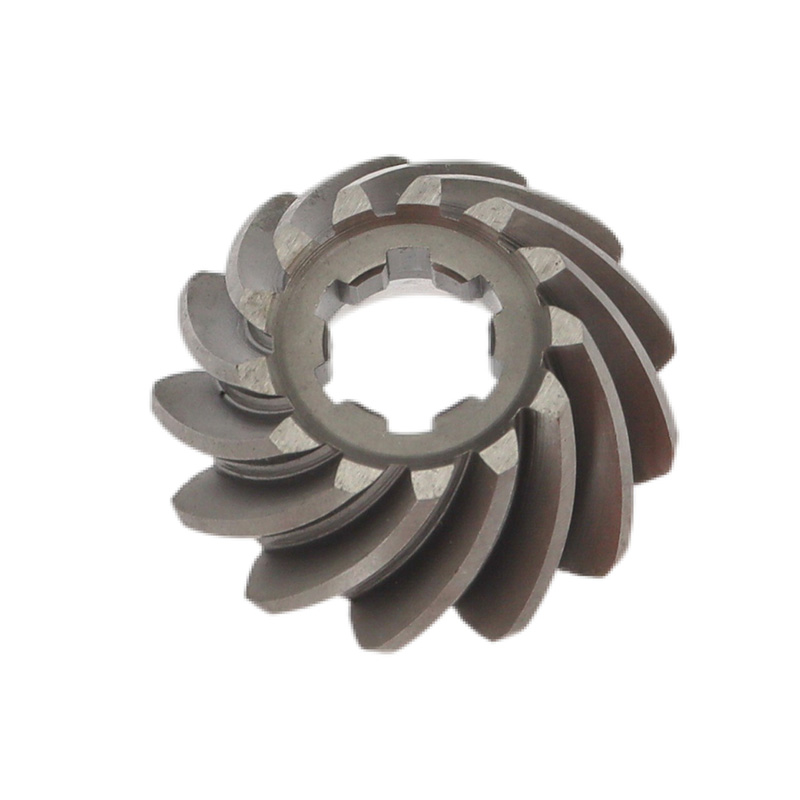
Not as a universal rule. Compare named grades, heat-treatment conditions, and finished tooth geometry. A carburized alloy steel may offer an advantage in flank hardness, while a hardened stainless grade may be more suitable where corrosion would otherwise shorten service life.
316 can suit some lightly loaded marine mechanisms. It is not a default replacement for a hardened pinion or driven gear in a loaded outboard lower unit. Confirm tooth bending and contact capacity before considering the substitution.
Not on the basis of tensile strength alone. Compare the available tooth hardness profile, fatigue performance, mating gear, lubrication, and corrosion exposure. An aged 17-4 PH gear does not reproduce the hard case and tougher core of a carburized 8620 gear.
Yes, unless the drive was specifically designed and validated to operate without it. Corrosion resistance does not prevent sliding wear or adhesive damage. Use the lubricant specified for the assembly, not one chosen only because the gear is stainless.
No. First establish whether saltwater reaches the teeth during normal operation. In a sealed lower unit, follow the original material, geometry, and lubrication requirements unless the responsible design authority approves a substitution.
For a replacement, start with the part number, engine model and serial range, gear ratio, and whether you need one gear or a set. For a new design, add the drawing, mating gear details, load and speed, lubrication, material condition, and inspection requirements.
- Gear Solutions, *An Overview of Heat Treatment Techniques* — carburizing, case hardening, and common gear steel grades. [gearsolutions]
- Thermal Processing, *The Effect of Surface Carbon Content on the Performance of Carburized Steels* — SAE 8620 hypoid gear fatigue results and the trade-off between tooth-root and contact fatigue. [thermalprocessing]
- Outokumpu, *Corrosion Tables and Charts for Stainless Steel* — environmental inputs and limitations of laboratory corrosion data. [outokumpu]
- British Stainless Steel Association, *Corrosion Tables and Diagrams* — differences between stainless grade families and limitations for predicting localized corrosion. [bssa.org]
- Carpenter Technology, *CarTech 420 Stainless* — grade-specific hardening response and representative Rockwell C hardness. [carpentertechnology]
- Rolled Alloys, *17-4 Stainless Data Sheet* — typical hardness and mechanical properties by aging condition. [rolledalloys]
- Mercury Marine, *Marine Lubricants & Tips: More Than Just Oil* — lower-unit lubricant maintenance and inspection for water. [mercurymarine]


