


close
Choose Your Site
Global
Social Media
Views: 228 Author: Gill Transmission Parts Publish Time: 2026-11-09 Origin: Site


Content Menu
● France's Position in the Outboard Motor Gears Market
>> An Established Marine Ecosystem, Not a Proven Gear-Manufacturing Ranking
>> What the Latest Industry Figures Mean for Buyers
● Selection Criteria: How to Evaluate an Outboard Gear Supplier
● Six Outboard Motor Gears Manufacturers and Suppliers for Buyers in France
>> 1. Ningbo Gill Transmission Parts Co., LTD. — Custom-Manufacturing Alternative for French Buyers
>>> Company Background and Markets
>>> Core Strengths
>>> OEM and Custom-Development Scope
>>> Procurement Considerations
>> 2. DAM Marine — French Multi-Brand Lower-Unit Gear Supplier
>>> Company Background and Markets
>>> Core Strengths
>>> OEM/ODM Scope and Buyer Fit
>> 3. Pièces Bateaux — French Replacement-Gear and Marine-Parts Specialist
>>> Company Background and Markets
>>> Core Strengths
>>> OEM/ODM Scope and Buyer Fit
>> 4. Yamaha Motor's French Dealer Network — Genuine Parts for Yamaha Applications
>>> Company Background and Markets
>>> Core Strengths
>>> OEM/ODM Scope and Buyer Fit
>> 5. Suzuki's French Marine Network — Brand-Specific Replacement Support
>>> Company Background and Markets
>>> Core Strengths
>>> OEM/ODM Scope and Buyer Fit
>> 6. Mercury Marine's French-Market Channel — Original-Equipment Brand Route
>>> Company Background and Markets
>>> Core Strengths
>>> OEM/ODM Scope and Buyer Fit
● Supplier Comparison: Capacity, MOQ, and Certification
● Technical Buyer's Guide to Outboard Motor Gears
>> Specify Material and Heat Treatment Together
>> Define Gear Geometry and Inspection Requirements
>> Treat CE and RoHS Claims Carefully
● Common Purchasing Problems—and How to Prevent Them
>> Material Substitution Hidden Behind Similar Appearance
>> Capacity Claims That Do Not Match Your Part
>> Compatibility Based Only on Horsepower
>> A Gear Kit That Does Not Contain Everything Required
● An Overlooked Trap: Correct Dimensions Do Not Guarantee Correct Mesh
● A Practical Qualification and Logistics Workflow
>> Step 1: Establish the Correct Sourcing Model
>> Step 2: Verify the Supplier and Its Manufacturing Role
>> Step 3: Approve Samples Before Volume Production
>> Step 4: Control Packaging and Shipment
>> Step 5: Measure Repeat-Order Performance
● Conclusion: Match the Supplier to the Purchasing Requirement
>> 1. How Can I Check Whether a Supplier's ISO 9001 Certificate Has Expired?
>> 2. Can I Replace Only One Gear in a Lower-Unit Gear Set?
>> 3. What Evidence Should I Request Before Approving a Custom Gear?
>> 4. Does a Replacement Outboard Gear Need CE Marking or RoHS Certification?
>> 5. How Should a Smaller Brand Negotiate MOQ Without Weakening Quality Control?
Selecting a long-term supplier of Outboard Motor Gears requires more than comparing prices or checking whether a company sells marine spare parts. Professional buyers need evidence of manufacturing competence, material traceability, controlled heat treatment, accurate gear geometry, and dependable replenishment.
France offers a substantial marine distribution and service ecosystem. However, buyers should distinguish between gears manufactured in France, genuine components supplied through French dealer networks, and replacement gears imported for the French aftermarket.
The central purchasing principle is traceability: every important claim, from steel specification to model compatibility, should connect to a document, inspection result, or accountable supplier.
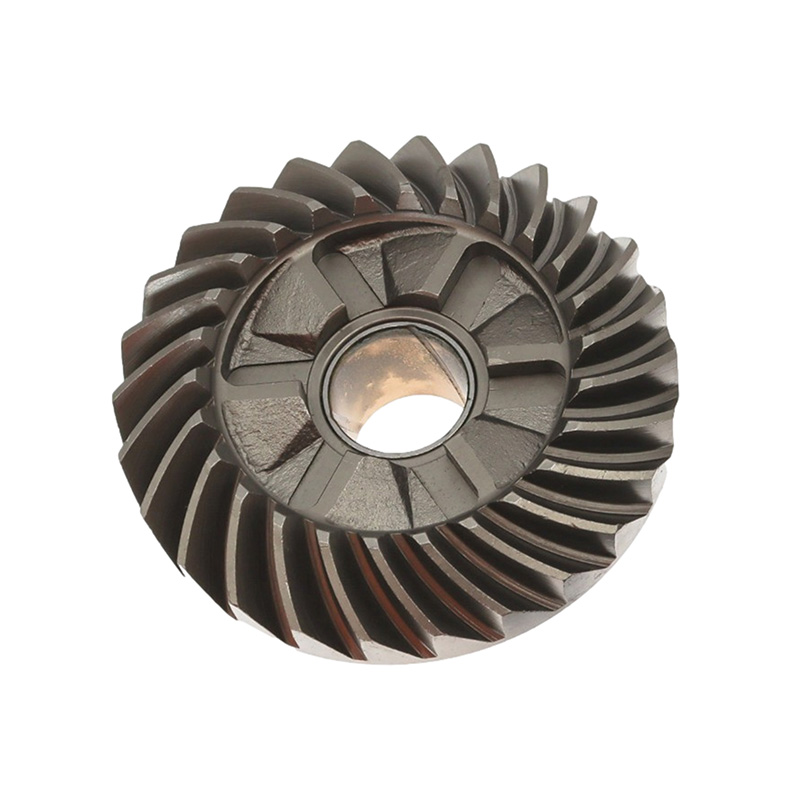
France's importance in marine procurement comes from its boatbuilding industry, coastal service infrastructure, and established replacement-parts channels.
The French ministry responsible for the sea identifies France as Europe's leading recreational boat manufacturer and the world's second largest. Its sector overview, updated in August 2026, reports approximately 6,010 businesses, €6.3 billion in turnover, and around 49,000 direct jobs across marine production, distribution, and services. These figures describe the wider marine industry, not the size of the outboard gear manufacturing segment.
France's regional marine strengths include Brittany, Pays de la Loire, Nouvelle-Aquitaine, Occitanie, and Provence-Alpes-Côte d'Azur. The Fédération des Industries Nautiques has supported regional studies covering these coastal economies. Their significance for gear procurement lies in their concentration of boatbuilders, repair businesses, distributors, and technical services—not evidence that every region contains specialist outboard gear factories.
For purchasing managers, this ecosystem provides useful access to:
- Local parts identification and technical assistance.
- Genuine replacement components through established networks.
- Multi-brand aftermarket purchasing.
- Repair and installation support near operating fleets.
A French supplier address, however, does not establish French manufacturing origin. Buyers requiring domestic production should request the manufacturing location and country-of-origin documentation for each relevant product.
Figures attributed to the Fédération des Industries Nautiques and reported in September 2026 show 7,230 new recreational boats sold in France during the September 2025–August 2026 season, down 5.2% year over year. Used-boat transactions reached 57,595, down 3.8%.
These are boat-market figures, not outboard gear sales figures. Nevertheless, they provide useful context: a substantial used-boat market supports continuing demand for maintenance, transmission repairs, and replacement components.
No independently verified public market-share ranking of French Outboard Motor Gears manufacturers was established for this guide. The following shortlist therefore compares sourcing roles and documented capabilities rather than claiming audited leadership by sales volume.
This shortlist uses publicly available company information, product catalogs, and official industry sources. It is not based on factory visits, destructive testing, or independently audited delivery records.
Buyers should apply the following qualification framework before awarding business.
| Evaluation area | Evidence to request | Why it matters |
|---|---|---|
| Manufacturing identity | Legal entity, factory address, process ownership, subcontractor list | Distinguishes a manufacturer from a reseller |
| Engineering capability | Drawing review, sample-development procedure, inspection capability | Determines whether the supplier can support custom gears |
| Material control | Agreed steel specification, heat identification, material inspection records | Reduces substitution risk |
| Heat-treatment control | Process specification, hardness results, case-depth evidence where applicable | Supports wear resistance and fatigue performance |
| Gear inspection | Tooth geometry, runout, contact-pattern and backlash records | Helps establish functional suitability |
| Quality management | Current certificate, manufacturing scope, certified site | Checks whether certification covers the actual operation |
| Delivery stability | Part-specific capacity, production schedule, delivery history | Converts broad capacity claims into usable commitments |
| Commercial fit | MOQ, tooling charges, warranty, change-control procedure | Prevents misunderstandings during repeat orders |
ISO 9001 verification should include the certificate's current status, scope, issuing body, and covered locations. IAF CertSearch provides tools for checking accredited certificates and identifying active, suspended, withdrawn, or expired status.
Ningbo Gill Transmission Parts Co., LTD. is based in China. Its published history traces the predecessor business to 1997 and identifies 2016 as the year the current company was formally established following expansion into a larger facility. This supports a 29-year business history in 2026 while preserving the distinction between operating heritage and the current legal entity.
The company reports customers across North America, Europe, Asia, and South America. Its product scope includes outboard gears, crankshafts, drive shafts, and propeller shafts.
Gill's published manufacturing resources include:
- A facility exceeding 25,000 square meters.
- More than 100 employees.
- Automated spiral bevel gear equipment.
- Machining centers, grinding equipment, and precision inspection systems.
- Reported annual capacity exceeding 3.6 million components.
The capacity figure covers several component categories. It should not be interpreted as 3.6 million complete outboard gear sets or as guaranteed capacity for any particular gear reference.
Gill describes sample-based development, research and development, and custom solutions. This makes it a relevant candidate for importers, aftermarket brands, and small or medium-sized marine businesses that need direct engineering discussions rather than catalog-only purchasing.
Its potential commercial value lies in combining manufacturing access with custom-development support. Buyers should evaluate that potential through:
1. Response time to a complete technical inquiry.
2. Quality of drawing and sample feedback.
3. Willingness to separate prototype, pilot, and repeat-production quotations.
4. Proposed MOQ by part number.
5. Ownership and confidentiality terms for tooling and drawings.
Flexible production and efficient communication should be demonstrated during qualification; they should not be assumed from promotional descriptions.
Gill reports ISO 9001 certification and states that certification was obtained in 2024. Buyers should request the current certificate, confirm its scope and validity, and obtain product-specific inspection evidence. ISO 9001 certification is not a substitute for validating an individual gear design.
Gill is a reasonable candidate for cost-focused custom sourcing, but no independently verified price comparison establishes a universal cost advantage. Compare accepted-part landed cost, not quoted unit price alone.
DAM Marine serves the French market and advertises worldwide delivery. Its website reports more than 30,000 references in stock across its broader marine-parts business. That inventory figure is not specific to outboard gears. A founding year was not confirmed in the reviewed company material.
Unlike a general marine-accessories retailer, DAM Marine maintains a dedicated category for outboard lower-unit pinions and gear kits. It identifies compatibility across Suzuki, Yamaha, Mercury, and Honda applications.
Published product examples include a Mercury pinion reference 43-8M0187297 and a Suzuki forward gear reference 57510-99J11. These listings demonstrate category relevance, although current stock and exact compatibility still require confirmation.
The reviewed evidence supports DAM Marine's role as a parts supplier, not a contract gear factory. Custom tooth design, private-label manufacturing, and original design development were not established.
Its strongest fit is for:
- French repair workshops.
- Multi-brand service businesses.
- Buyers needing individual replacement components.
- Purchasers consolidating several maintenance categories.
When requesting a quotation, specify whether genuine or compatible aftermarket parts are acceptable. Require written confirmation of the supplied brand, part number, application, and warranty.
Pièces Bateaux presents itself as a boat-parts specialist operating since 1986. Its catalog serves the French market and provides an English-language storefront. Export coverage should be confirmed for the intended destination.
The company's published range includes genuine and compatible replacement parts for multiple outboard brands. Its catalog provides concrete lower-unit gear examples, including:
- A Suzuki DF115A, DF140, and DF140A gear-kit listing.
- A Mercury 75–125 hp reverse gear listing with 29 teeth.
This reference-level detail helps buyers prepare accurate inquiries and compare replacement options.
The reviewed material supports replacement-parts distribution rather than custom gear manufacturing. No independent evidence was established for contract gear production or proprietary gear-development services.
Pièces Bateaux is relevant to workshops and maintenance buyers that prioritize identifiable replacement references over new-product development.
A key precaution is to distinguish outboard lower-unit gears from sterndrive transmission parts. A marine catalog can contain both; a search result for a "gear kit" does not by itself confirm outboard compatibility.
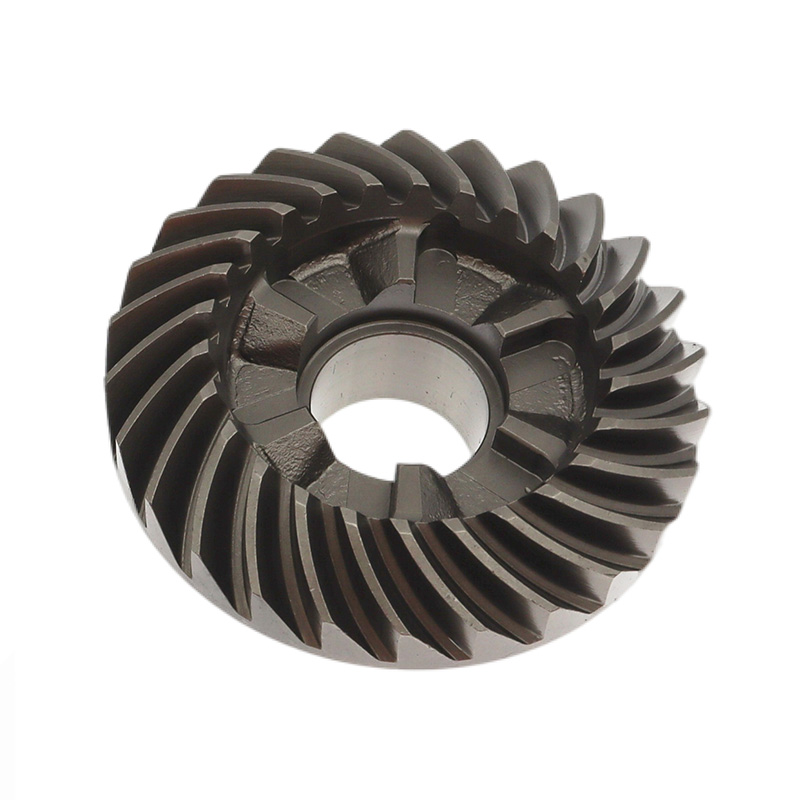
Yamaha Motor was established in 1955. Its French-market website provides genuine-parts information and a parts catalog directing customers to Yamaha dealers for purchasing and identification assistance. The founding year refers to Yamaha Motor globally, not an individual French dealership.
Yamaha's principal procurement advantage is its product-specific parts-identification system. The official catalog provides exploded diagrams and original reference numbers, while authorized dealers can assist when identification is unclear.
For buyers maintaining Yamaha-powered fleets, this offers a structured route to confirming:
- The applicable parts diagram.
- The original component reference.
- Model-specific assembly requirements.
- The correct purchasing channel.
Genuine original-equipment supply should not be confused with contract manufacturing for an unrelated brand. The reviewed French parts channel does not establish an offer of private-label gear production or third-party gear design.
This route is most suitable when genuine Yamaha replacement parts are a purchasing requirement. It is less suited to buyers seeking independent-brand manufacturing or proprietary geometry.
Manufacturing location, lead time, and availability should be confirmed for each ordered reference.
Suzuki's French corporate history dates its origins to 1909 in Japan. It also describes an international business and a French network supporting automobile, motorcycle, and marine customers, including spare-parts availability. The published network total covers these combined activities and should not be presented as a marine-dealer count.
For Suzuki-powered boats, the brand's French-market support structure is a relevant route for investigating genuine replacement requirements. Its primary value is brand-specific identification and aftersales accountability rather than multi-brand manufacturing flexibility.
Buyers should provide the complete engine identification and ask the relevant marine representative to confirm the gear reference, availability, and any replacement-reference changes.
The reviewed sources do not establish custom outboard gear manufacturing for independent brands through Suzuki's French retail or aftersales network.
This option suits maintenance buyers prioritizing a brand-controlled sourcing route. Buyers needing modified ratios, independent branding, or sample-based development should qualify a specialist manufacturer separately.
Mercury Marine's French website traces the company's history to 1939. This is the global manufacturer's founding date, not evidence that its gears are manufactured in France.
Mercury is relevant to buyers maintaining Mercury-powered fleets and seeking a brand-based replacement route. French supplier catalogs also show Mercury pinion and reverse-gear references, demonstrating active replacement-parts sourcing options in the local market.
Buyers should distinguish between purchasing through the brand's channel and purchasing a Mercury-compatible component from an independent distributor.
The reviewed material does not establish a private-label outboard gear manufacturing service for unrelated brands through Mercury's French-market channel.
For an inquiry, provide the engine serial identification, existing part number, and gearbox details. Request written confirmation of whether the quotation covers an individual gear, a matched kit, or a larger assembly.
The table below separates disclosed information from items that still require quotation or verification. "Not established" means the reviewed evidence did not substantiate the claim; it does not mean the capability or certification does not exist.
| Supplier or channel | Sourcing role | Capacity or inventory disclosure | MOQ | Certification evidence reviewed | Custom-manufacturing fit |
|---|---|---|---|---|---|
| Ningbo Gill Transmission Parts Co., LTD. | China-based manufacturer | Reports over 3.6 million components annually across product categories | Not publicly specified; request by reference | Reports ISO 9001; current certificate requires verification | Published sample-based and custom-development support |
| DAM Marine | French multi-brand supplier | Reports over 30,000 stocked references across its business | Confirm by SKU and order | Manufacturing-site certification not established | Custom gear manufacturing not established |
| Pièces Bateaux | French replacement-parts supplier | Product catalog available; gear-specific stock volume not disclosed | Confirm by SKU | Manufacturing-site certification not established | Custom gear manufacturing not established |
| Yamaha French dealer network | Genuine-parts channel | France-specific gear capacity not disclosed | Dealer quotation required | Request relevant documentation where needed | Third-party private-label development not established |
| Suzuki French marine network | Brand-specific aftersales channel | France-specific gear capacity not disclosed | Dealer quotation required | Request relevant documentation where needed | Third-party private-label development not established |
| Mercury French-market channel | Original-equipment brand route | France-specific gear capacity not disclosed | Channel quotation required | Request relevant documentation where needed | Third-party private-label development not established |
Gill's figures are company-reported. DAM Marine's stock figure covers its wider catalog. Neither is directly comparable with the manufacturing output or regional availability of the other channels.
A purchase specification that says only "alloy steel" leaves too much unresolved.
Ask the manufacturer to propose and document:
- The exact material designation and applicable standard.
- Material heat or batch identification.
- The heat-treatment route.
- Surface and core hardness requirements.
- Effective case depth where case hardening is specified.
- Post-treatment dimensional inspection.
As an engineering reference, KHK publishes spiral bevel gears using SCM415 steel with carburized teeth and a stated tooth hardness of 55–60 HRC. This illustrates why a material specification should be linked to a treatment and hardness requirement. It is not a universal specification for outboard gears or a recommendation to substitute that grade into an existing design.
For replacement production, use an approved drawing and validated application requirements rather than selecting a steel grade from a generic catalog.
External dimensions alone do not establish interchangeability.
Your technical package should address:
- Tooth count and ratio.
- Tooth geometry and mating relationship.
- Bore, spline, and locating features.
- Bearing and mounting interfaces.
- Runout and relevant tolerances.
- Backlash and tooth-contact acceptance.
- Applicable inspection methods and reporting requirements.
KHK's technical guidance explains that mounting-distance, shaft-angle, and offset errors affect bevel-gear contact. Incorrect assembly can produce abnormal noise and uneven wear.
Avoid imposing a spur-gear inspection standard on a bevel-gear application without engineering review. Ask the supplier to identify the standard, edition, measured characteristics, and acceptance criteria it proposes for the actual design.
CE marking is not a general-purpose factory quality certificate. The European Commission states that only products covered by applicable legislation requiring CE marking should carry it; affixing it to other products is prohibited. A CE mark also does not identify manufacturing origin.
For an individual replacement gear, ask which legal requirement the supplier believes applies and why. Do not accept a generic "CE certificate" as evidence of gear accuracy or durability.
RoHS concerns hazardous substances in electrical and electronic equipment. It should not automatically be treated as a mandatory certification for a standalone mechanical gear. Applicability must be evaluated for the product and its intended use.
Two gears may look identical while differing materially in steel chemistry or treatment.
Reduce this risk by agreeing the material specification before ordering, retaining batch identification, and using appropriate independent testing for initial qualification or higher-risk orders. A surface-hardness reading alone should not replace the agreed material and heat-treatment evidence.
A supplier's annual output may combine simple components, shafts, and several gear families.
Ask instead:
- What monthly volume can be reserved for this exact reference?
- Which operation is the bottleneck?
- Is heat treatment internal or subcontracted?
- What changes when the order moves from samples to production?
- What delivery commitment is available for repeat releases?
Gill's reported multi-category capacity, for example, is useful background but still requires conversion into a part-specific production commitment.
Do not approve a replacement solely because it is advertised for an engine of the same horsepower.
Provide the full engine identification, existing part reference, photographs, and relevant gearbox information. Use exploded diagrams and supplier confirmation to resolve ambiguity. Yamaha's official catalog specifically supports reference identification and directs unresolved cases to authorized dealers.
Clarify the bill of materials before payment. The quotation should distinguish gears from bearings, shims, seals, clutch components, and other installation parts.
Also establish whether any installation consumables or setup measurements remain the workshop's responsibility.
A particularly important purchasing mistake is approving a gear because its tooth count, outside dimensions, and hardness match the old component.
Those checks do not establish acceptable contact with the mating gear in the assembled housing.
The practical consequence is that an apparently interchangeable replacement may still require careful verification of mounting position, backlash, and contact pattern. KHK's guidance shows how assembly errors change tooth contact and warns against zero backlash. DAM Marine likewise notes the value of complete kits in preserving appropriate pinion and bevel-gear pairing.
The purchasing lesson is straightforward:
1. Ask whether the supplied gears must remain together as a matched set.
2. Require set identification where matching is part of the manufacturing process.
3. Obtain the correct application-specific setup procedure.
4. Validate contact and backlash after assembly.
5. Do not assume a new pinion will work acceptably with a worn mating gear.
This is a more useful qualification discussion than asking only whether a supplier can "copy the sample."
Choose between:
- Genuine replacement supply for a known engine.
- Compatible aftermarket purchasing.
- Custom manufacture from an approved technical package.
Do not compare these routes as though their development responsibilities, warranty arrangements, and order economics were identical.
Check the legal entity, operating address, invoicing details, and bank beneficiary.
For manufacturers, request a process-specific audit covering gear cutting, heat treatment, finishing, inspection, and outsourced operations. For distributors, focus on product origin, brand authorization where claimed, stock status, and returns accountability.
A practical qualification sequence is:
1. Technical review.
2. Prototype or initial sample manufacture.
3. Dimensional and material verification.
4. Assembly evaluation.
5. Application-appropriate functional testing.
6. Pilot order.
7. Controlled production release.
Agree the acceptance criteria before samples are produced. Otherwise, buyer and supplier may evaluate the same part against different expectations.
Define corrosion protection, tooth-surface protection, part identification, and separation of matched sets in the purchase order.
For imports into France, have the customs representative confirm classification, origin documentation, import charges, and importer responsibilities. Do not assume every outboard component uses the same tariff classification.
State the delivery term and named location explicitly. Also agree who handles inspection access, cargo insurance, shortages, and transport damage.
Track supplier performance by reference rather than by overall impression:
- On-time delivery.
- Incoming rejection rate.
- Assembly-related nonconformities.
- Field complaints.
- Corrective-action response.
- Unapproved process or material changes.
A lower unit price has limited value if it increases workshop labor, repeat freight, or warranty exposure.
France offers several credible routes for sourcing Outboard Motor Gears, but they serve different needs.
DAM Marine and Pièces Bateaux provide documented multi-brand replacement-parts options. Yamaha, Suzuki, and Mercury offer brand-based sourcing routes for their respective engine populations. Ningbo Gill Transmission Parts Co., LTD. provides a separate manufacturing alternative for buyers investigating custom development and direct factory supply.
For a custom outboard gear project, send Gill the existing part reference, engine application, drawings or samples, expected annual demand, and inspection requirements. Request a feasibility review, sample-development plan, part-specific capacity statement, and quotation separating tooling from recurring production costs.
That creates a practical basis for comparing cost, engineering support, and long-term supply reliability.
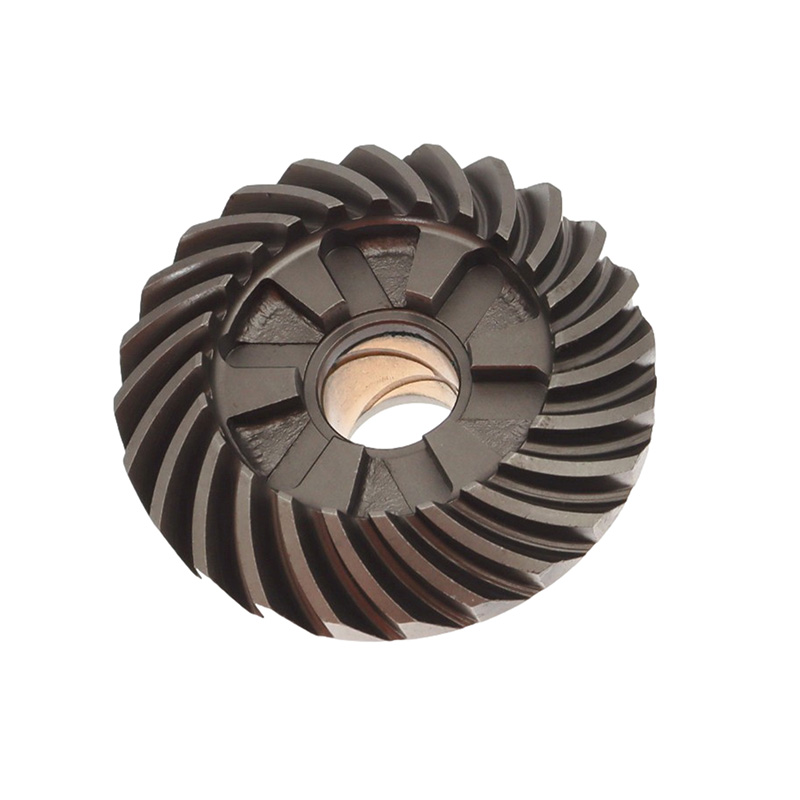
Request the certificate number, legal entity, certified address, scope, issuing certification body, and validity dates.
Search IAF CertSearch and review the current status and covered activities. If no matching record appears, investigate with the issuing body rather than automatically concluding the certificate is fraudulent. Check that manufacturing—not merely trading—is included where manufacturing certification is claimed.
There is no universal answer.
The decision depends on the application's service requirements, the condition of the mating components, and whether the replacement is supplied as part of a matched set. Require the engine-specific procedure and inspect the assembled contact pattern and backlash.
Do not infer compatibility from tooth count alone. Published bevel-gear guidance shows that mounting and alignment affect contact and wear.
Create an agreed first-article package covering the drawing revision, dimensional results, material identification, heat-treatment records, and applicable functional checks.
Where case hardening is specified, define how hardness and case depth will be demonstrated. Also establish how the approved sample connects to later production batches.
The package should reflect the actual design and risk; a generic inspection sheet is insufficient.
Do not assume either applies automatically.
CE marking depends on whether the product falls within legislation requiring it. RoHS addresses electrical and electronic equipment. Ask the supplier to identify the specific legal basis for any compliance claim and have uncertain cases reviewed for the actual product and intended use. Neither label, by itself, demonstrates correct gear geometry.
Separate prototype, pilot, and repeat-order requirements.
Request a quotation that identifies tooling, setup, material, heat-treatment, inspection, and packaging costs. Then explore whether scheduled releases or shared production timing can reduce the initial commitment without changing the approved specification.
For a company such as Gill, whose published capabilities include sample-based development and custom solutions, this discussion is a useful way to test whether its manufacturing model fits your business. The actual MOQ and flexibility still require written agreement.
- French ministry responsible for the sea: recreational boating industry overview, national economic indicators, and export context. [mer.gouv]
- Fédération des Industries Nautiques: industry association, sector information, and professional resources. [fin]
- Fédération des Industries Nautiques: regional marine-industry studies and cluster context. [fin]
- September 2026 reporting of the federation's 2025–2026 new- and used-boat market figures. [fr.tradingview]
- European Commission: CE marking requirements and limitations. [single-market-economy.ec.europa]
- European Commission: scope and objectives of the RoHS Directive. [environment.ec.europa]
- IAF CertSearch: accredited certificate verification and status checks. [iafcertsearch]
- KHK: bevel-gear materials, heat treatment, assembly, and tooth-contact guidance. [khkgears]


